

Matching Bridal Rings: Tips for Pairing Bands with Any Center Stone Shape
How to Pair a Wedding Band with Any Engagement Ring Shape
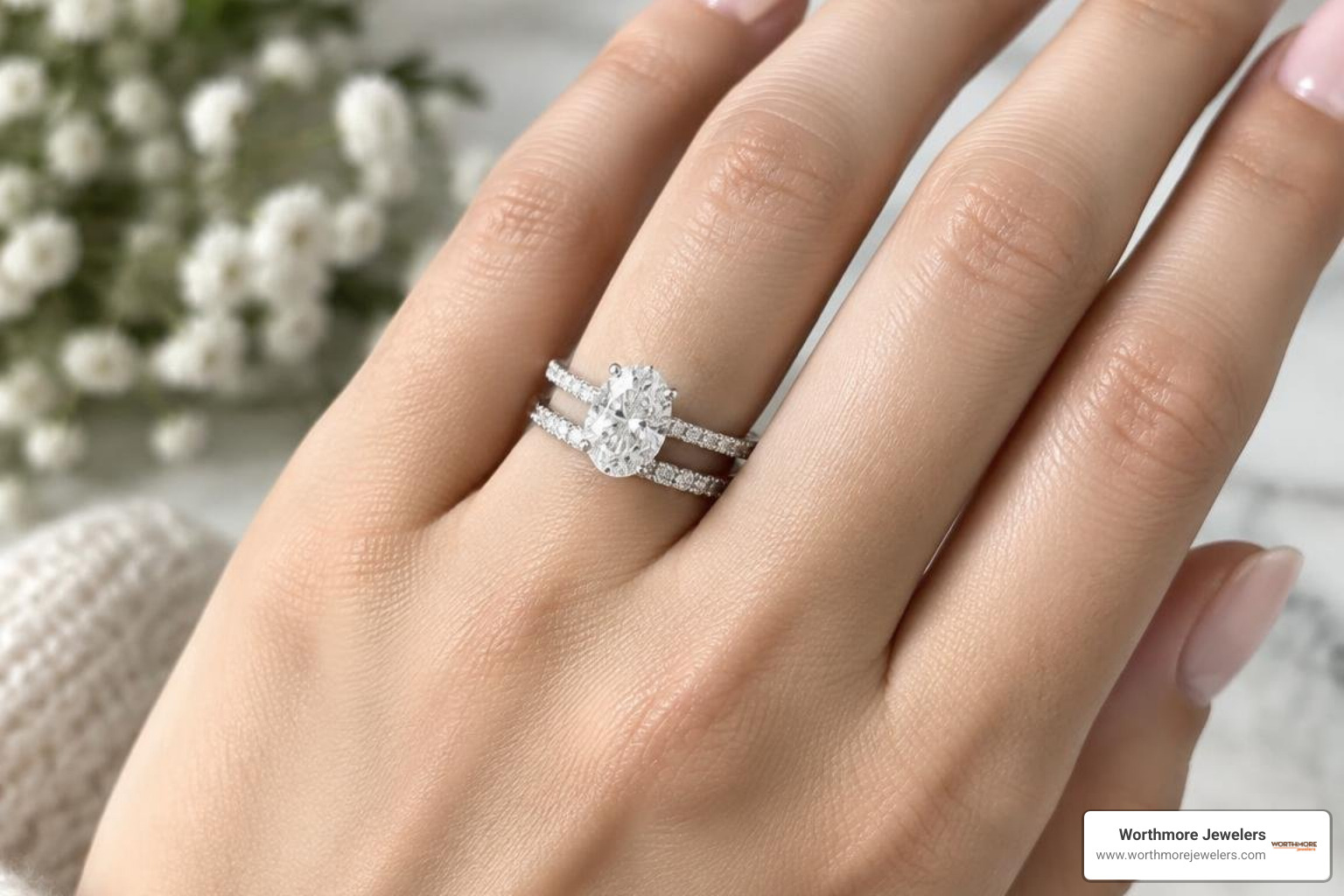
To pair a wedding band with engagement ring successfully, start with the center stone and setting. Choose a band that follows the ring's shape, clears its basket or halo, and feels balanced in width. A straight pavé or classic metal band often suits a raised solitaire, while a contoured, open cuff, or curved band can sit closer to pear, marquise, emerald-cut, and low-set halo rings.
Before choosing, check these three details:
- Fit: Try both rings on together. They should sit comfortably without pressing against prongs or leaving an unwanted gap.
- Proportion: Match a delicate engagement ring with a slim band; pair a wider center stone or halo with a band that has enough visual weight.
- Style: Repeat one key detail, such as metal color, diamond shape, pavé sparkle, or vintage milgrain. Or create intentional contrast with mixed metals or a clean plain band.
The right stack should look connected, but it does not need to match perfectly. At Worthmore Jewelers, couples can explore classic, diamond-accented, contoured, and custom options to build a bridal set that fits their ring, routine, and personal style.
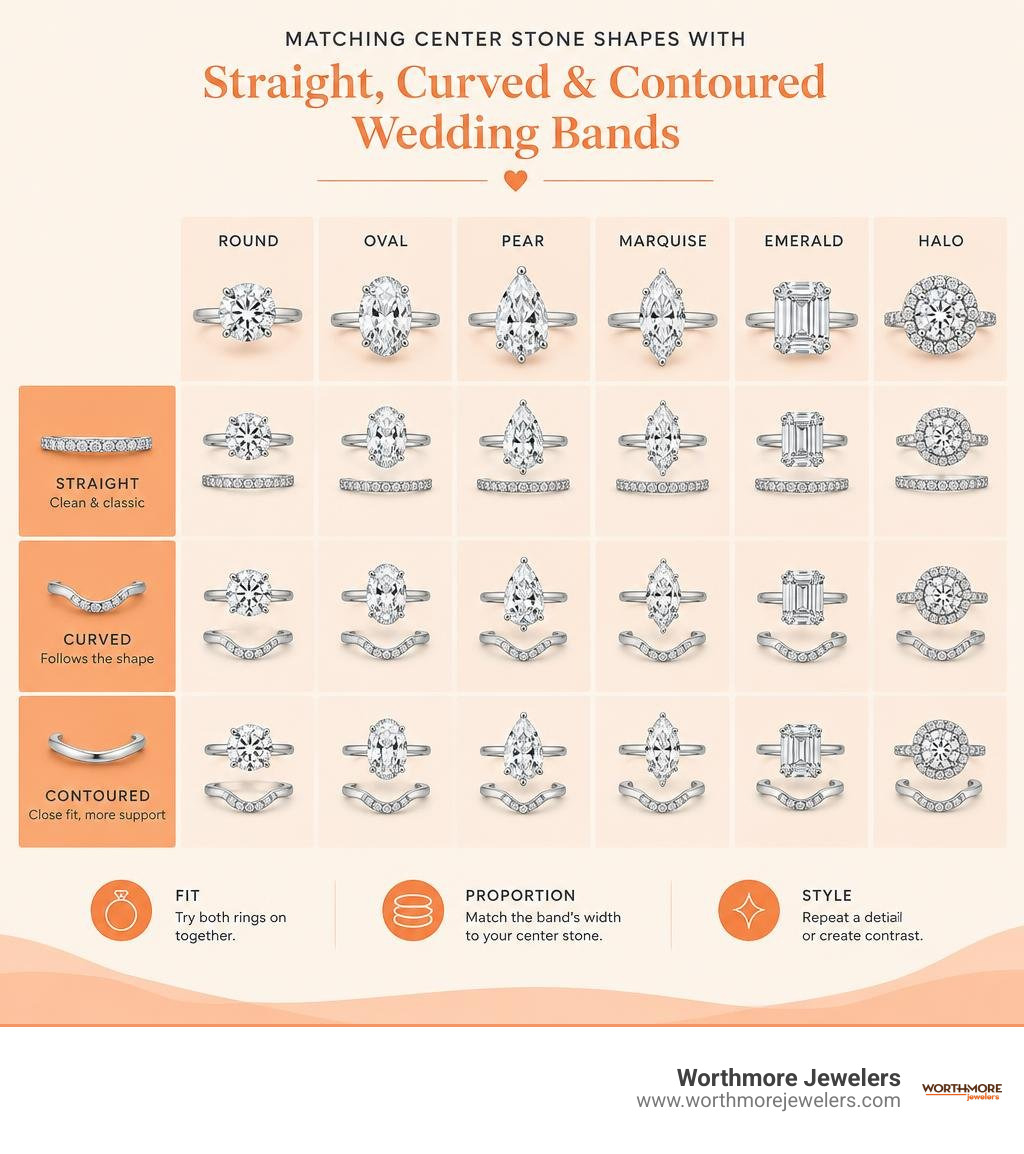
How to Match a Wedding Band with Engagement Ring Settings and Stone Shapes
Finding the right harmony between your rings comes down to setting height, center stone geometry, and metal silhouette. While browsing distinctive engagement ring styles, you will notice that every setting interacts differently with a side band. For a broader look at how ring profiles and diamond cuts work together, the engagement ring guide offers useful background on traditional and modern setting conventions.
When your rings sit together, their profiles should coexist without grinding metal or pinching skin. Achieving symmetry requires evaluating how the center stone's prongs, pavilion, or under-gallery extend beyond the base shank.
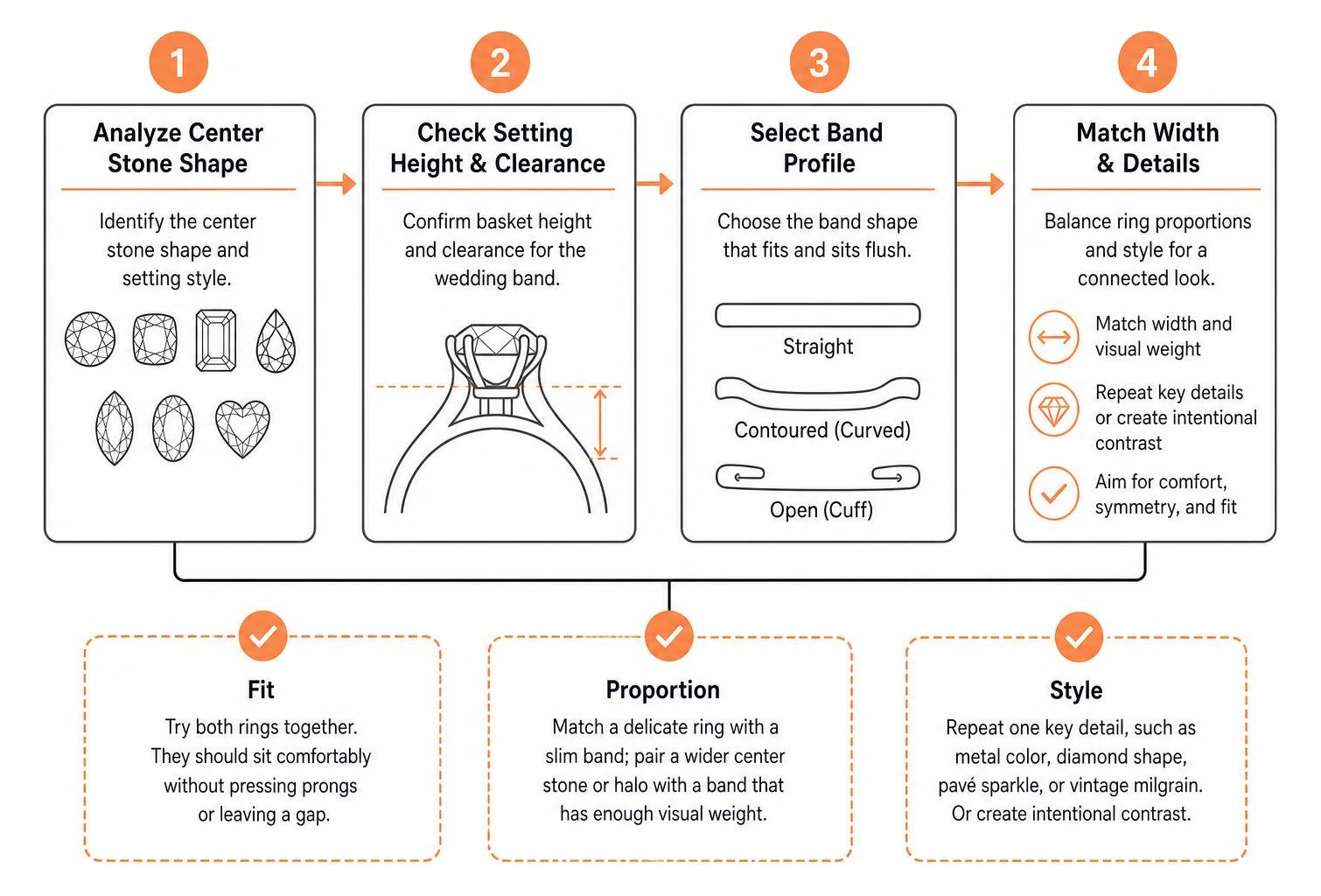
Solitaire and Halo Settings: Classic and Fancy-Cut Pairings
Solitaire engagement rings provide the most versatile canvas. Because a classic four- or six-prong solitaire usually elevates the diamond above the finger, standard straight bands can tuck neatly underneath the crown. Pairing a solitaire with a halfway diamond pavé band or a classic polished gold band creates timeless contrast that highlights the center stone.
Halo settings require extra attention to clearance. A traditional single or double pavé halo widens the footprint of the head. If the halo sits low on the finger, a straight wedding band will hit the edge of the halo basket, pushing the band outward and creating a visible gap. In these cases, a flush look requires a band curved around the perimeter of the halo, or an elevated basket designed specifically to let straight bands slide underneath.
Fancy Shapes: Emerald, Pear, and Marquise Coordination
Fancy-cut diamonds bring distinct geometric outlines that look stunning when echoed in the wedding band. When choosing the ideal engagement ring pairing, matching stone symmetry gives the stack an intentional, curated aesthetic:
- Emerald Cuts: Step-cut emerald diamonds carry sleek, architectural lines. They pair effortlessly with a milgrain emerald-cut eternity band or an emerald-cut diamond wide band ring, creating an art-deco bridal look.
- Pear Shapes: The teardrop silhouette creates asymmetry. Pairing a pear solitaire with an East West set pear-shaped eternity band or an arched chevron band frames the pointed tip without crowding the rounded base.
- Marquise Cuts: Marquise stones extend vertically across the finger. A marquise and round diamond wide band ring or an open cuff band balances the elongated points, keeping the stack balanced.
Choosing the Right Style: Eternity, Half-Eternity, and Open Cuff Designs
The structure of your band determines both its sparkle and its everyday comfort. Whether you love continuous sparkle or a low-maintenance profile, evaluating how the band wears over time is essential.
| Band Style | Diamond Coverage | Resizing Flexibility | Daily Durability | Best Suited For |
|---|---|---|---|---|
| Full Eternity | 360° around the finger | Very Difficult / None | Moderate (bottom stones exposed to impact) | Maximum brilliance; standalone wear |
| Half-Eternity | 50% top coverage | Easy to resize | High (smooth metal base protects stones) | Daily wear alongside engagement rings |
| Open Cuff | Gap at top with accent gems | Moderate adjustments | High (clears center stone settings) | Low-set stones, halos, and zero-gap stacks |
Evaluating Eternity vs. Halfway Bands for Daily Wear
Full eternity bands offer unbroken sparkle from every angle. However, because diamonds run along the underside of the finger, they come into frequent contact with steering wheels, gym equipment, and hard surfaces. Shared prong eternity styles leave stone girdles slightly exposed, requiring mindful wear. Additionally, full eternity bands cannot be easily resized if your finger size shifts over time.
Halfway pavé diamond bands solve these lifestyle challenges. By concentrating diamonds across the top half and leaving a smooth metal shank at the bottom, they combine brilliant top-facing sparkle with everyday durability. The plain base makes future resizing simple while preventing prong damage during daily activities.
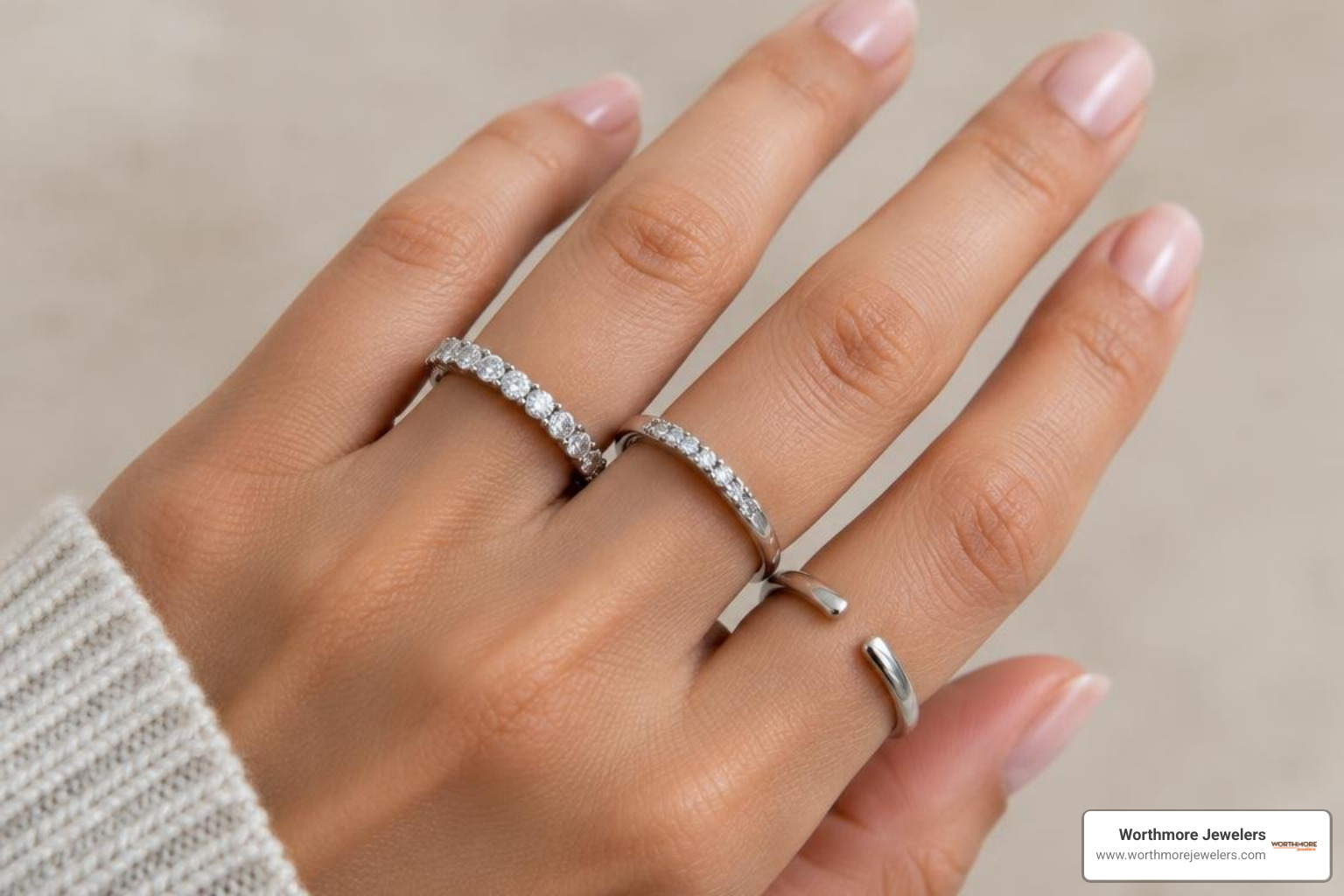
Open Cuff and Contoured Bands for Flush Alignment
For engagement rings with low baskets, elongated marquise cuts, or wide halos, standard straight bands rarely sit flush. This is where open cuff and contoured bands excel.
A round diamond open cuff band features a purposeful gap flanked by accent stones, allowing your center stone’s basket to nestle right into the opening. Similarly, curved or chevron bands trace the perimeter of fancy-cut gems. For couples exploring stacking wedding bands and engagement rings, these tailored shapes prevent rubbing while eliminating unwanted gaps between the rings.
Perfecting the Fit: Band Profiles, Widths, and Flex Technology
A visually appealing ring stack must also feel comfortable on your hand throughout the day. Achieving a seamless feel involves matching shank profiles, balancing band widths, and managing knuckle sizing.
Understanding proper engagement ring fit ensures your stack stays centered without spinning.
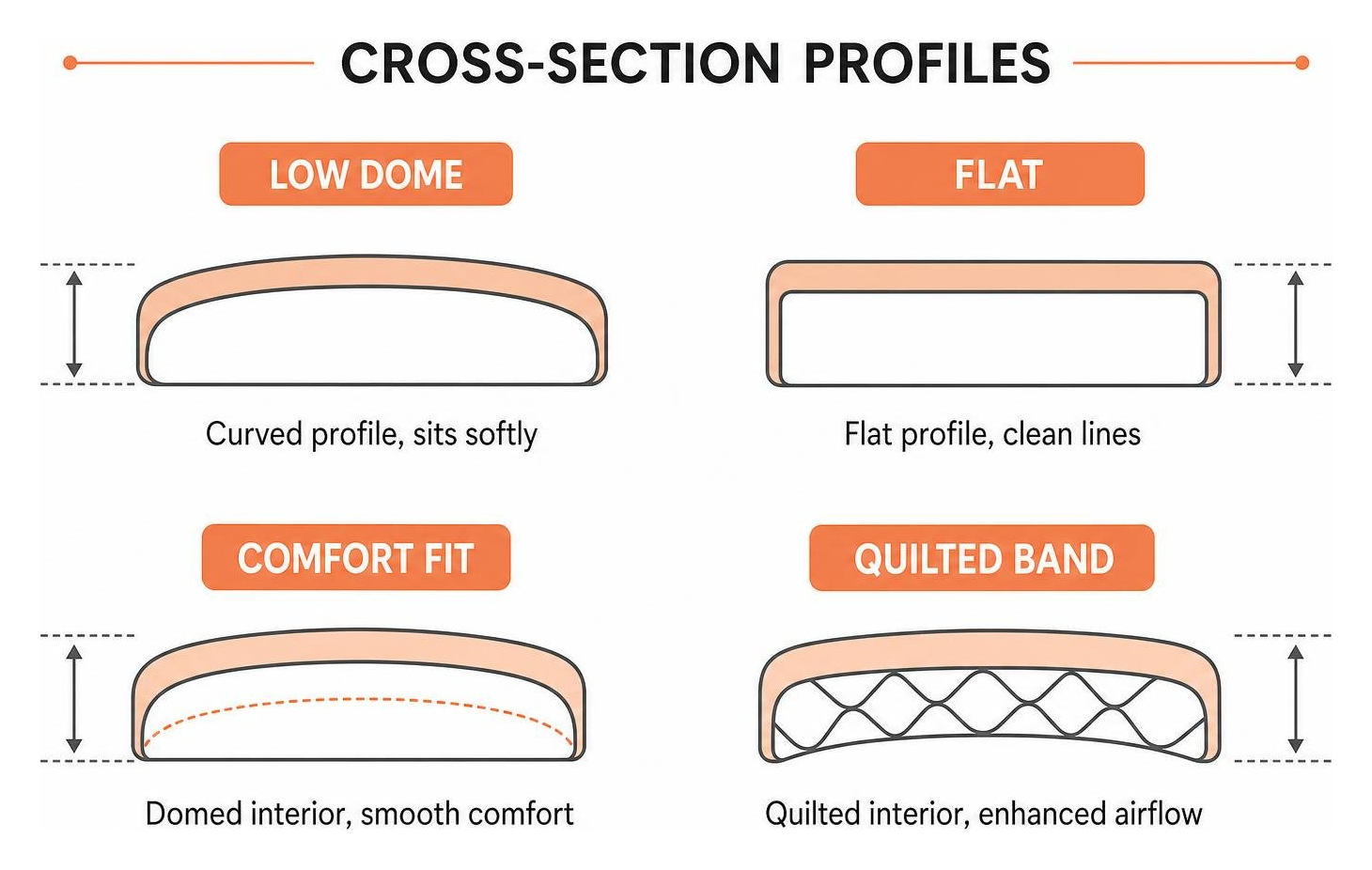
Width and Profile Considerations for a Seamless Stack
The cross-section profile of your wedding band should match the height of your engagement ring shank. If your engagement ring has a 1.8mm low-dome profile, pairing it with an overly tall 3.0mm flat band can cause the edge of the wedding band to dig into your neighboring fingers or rub against the engagement ring's prongs.
When balancing proportions:
- Petite Solitaires (1.5mm – 2.0mm shanks): Pair best with bands between 1.5mm and 2.2mm to keep the center stone as the visual focus.
- Substantial Three-Stone or Wide Bands: Balance well with bands ranging from 2.5mm to 4.0mm, preventing the wedding band from looking lost next to a heavier engagement setting.
Pairing an A.JAFFE Flex Band™ or Expandable™ Wedding Band with Engagement Ring Sets
A common challenge when pairing bridal rings is the knuckle-to-finger ratio. Many people have knuckles that are one or two sizes larger than the base of their finger, causing standard rings to spin or fit loosely once slid into place. Temperature shifts throughout the year can also cause fingers to swell and shrink.
To solve this, advanced engineering solutions provide a tailored fit:
- A.JAFFE Flex Band™ Technology: Features an internal spring mechanism engineered directly into the precious metal shank. The Classic Women's A.JAFFE Flex Band™ or the Halfway Double Shared Prong Diamond Flex Band™ gently expands as it glides over the knuckle, then contracts snugly at the base of the finger.
- A.JAFFE Expandable™ Bands: Designed with an expandable system that allows the band to open up to 2.5 sizes larger to clear stubborn knuckles, then snap securely into place.
Options like the Diamond Eternity A.JAFFE Expandable™ Band and the Scallop Eternity Diamond Band with Flex Band™ keep diamond bands perfectly aligned with your engagement ring, preventing top-heavy spinning.
Design Details, Metal Coordination, and Customization Options
Fine jewelry design lies in the small details. Subtle textures, interior engineering, and mixed metal choices allow you to personalize your bridal set.
Accents and Textures: Pavé, Scalloped, Milgrain, and Quilts® Interiors
Adding texture creates depth across your ring stack:
- Milgrain Detailing: Tiny metal beading applied along the edges of a band lends vintage romance and helps hide everyday surface scuffs.
- Scalloped Settings: Cutout metal borders along the diamond line allow light to enter from the sides, amplifying brilliance.
- Quilts® Interior Detailing: Featured in designs like the Faceted Quilts® Wedding Band and Minimal Open Cuff Band with Quilts® Interior, this patented waffle-patterned lining lifts the metal slightly off the skin. It promotes airflow, prevents moisture buildup, and stops the ring from turning on the finger.
- Pavé & Scattered Diamonds: A Quilts® Diamond Scattered Wedding Band or a Round Pavé Wedding Band balances refined diamond accents with comfortable structural support.
Customizing Your Wedding Band with Engagement Ring Harmony in Mind
If you have a unique vintage heirloom or an intricate custom engagement setting, finding an off-the-shelf band that fits flush can be difficult. Customizing your band ensures an exact fit.
Using our interactive Band Builder, you can adjust metal purities (such as 14k gold, 18k gold, or platinum), select matching diamond color and clarity grades, and incorporate personalized engraving. A custom-notched band can be tailored directly around your engagement ring's unique basket, giving you a custom fit without modifying your original ring.
Frequently Asked Questions About Pairing Bridal Rings
How do I prevent my wedding band from rubbing against my engagement ring?
When two metal rings sit side-by-side, constant micro-friction can wear down prongs over time. To prevent this, ensure both bands have matching profile heights so diamond girdles never touch adjacent metal. You can also place an ultra-thin (1mm) plain spacer band between them or have a bench jeweler solder the rings together into a unified bridal set.
Can I mix metals between my engagement ring and wedding band?
Yes! Mixing metals is a popular way to build an eclectic, modern ring stack. Pairing a platinum or white gold engagement ring with a warm 18k yellow gold or rose gold band adds contrast. That platinum is denser than gold; over decades of wear, a platinum band may cause minor surface wear on a softer gold ring if they fit loosely against each other.
How do I clean and maintain delicate pavé and flexible bands?
Clean your diamond wedding bands at home by soaking them in warm water mixed with mild dish soap, then gently brushing with a soft-bristled baby toothbrush. For flexible designs like the A.JAFFE Flex Band™ or micro-pavé settings, avoid harsh ultrasonic cleaners unless inspected by a professional, as strong vibrations can loosen small accent stones. Bring your set in annually for routine prong tightening and cleaning.
Conclusion
Your wedding band is an enduring symbol of your commitment, meant to complement your engagement ring while standing comfortably on its own. By balancing setting clearance, band width, diamond symmetry, and comfortable interior profiles, you can create a ring stack that looks beautiful and wears effortlessly every day.
At Worthmore Jewelers, we believe ring shopping should be an exciting, personalized experience. As Atlanta's premier destination for fine bridal jewelry, we provide an open-minded, pressure-free atmosphere with a curated selection of premier designer lines, flexible-fit innovations, and in-house custom design. Visit our welcoming showrooms in Midtown Atlanta and Decatur, Georgia, to find your perfect match, or browse our extensive collection of curated wedding bands in Atlanta today.
 EMAIL
EMAIL
 CALL
CALL
 MAP
MAP
 HOURS
HOURS