


A Crossover Engagement Ring Adds Dimension and Meaning
A crossover engagement ring has two metal strands that twist, overlap, or sweep around the center stone. The design draws the eye upward, helping the diamond or gemstone look more elevated and defined. This band design has become one of the most sought-after modern bridal trends because it offers couples a less expected alternative to a classic straight-band solitaire.
The crossing bands can symbolize two lives coming together, while the open, flowing shape adds movement from every angle. Styles range from a soft bypass design to a twisted pavé shank or an asymmetrical wrap-around setting. Unlike the static circle of a traditional engagement ring, the crossover band adds visual texture and dimension to any finger.
For the best result, choose a design that balances the center stone, feels smooth between the fingers, and leaves room for a wedding band. Factors like ring height, band width, and metal weight all influence how the ring feels during daily wear. Rings with highly sculptural profiles may sit taller on the finger, so it is worth trying on multiple silhouettes to understand how different variations behave in real life.
Worthmore Jewelers can help you compare diamond shapes, metal colors, and band profiles to create a crossover ring that feels personal and wears well every day. Their in-house team works directly with clients in Atlanta and Decatur, Georgia; this local, workshop-based approach makes it easier to refine proportions and custom jewelry details down to the last millimeter.
Crossover rings are proof that love does not always take a straight line - sometimes it takes the scenic route around the finger.
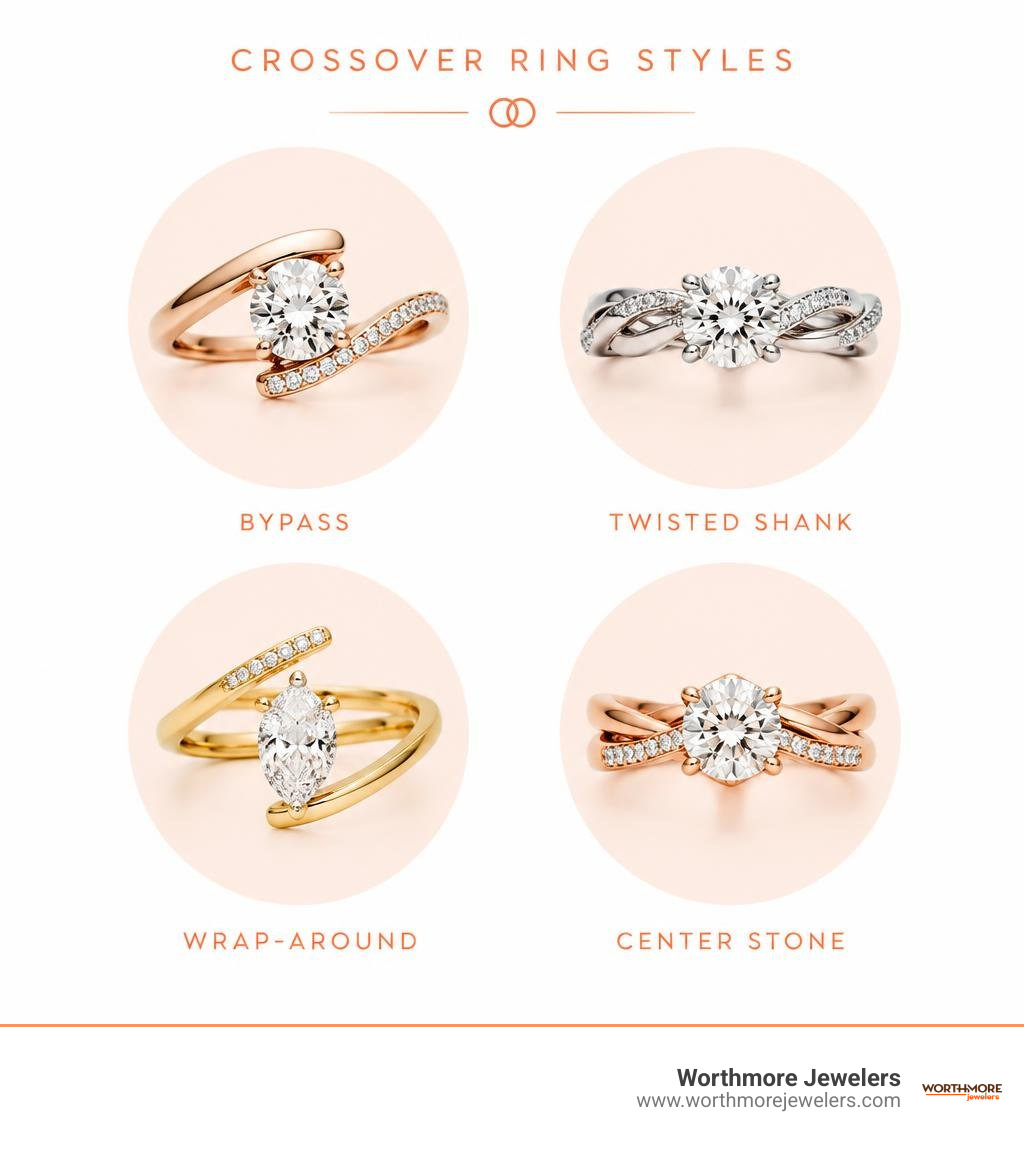
What Is a Crossover Engagement Ring and What Does It Symbolize?
At its core, an intertwined ring setting moves away from the rigid geometry of standard bands. Instead of encircling the finger in a static circle, the band divides, twists, or crosses over itself, creating an elegant bypass aesthetic that cradles your focal gem.
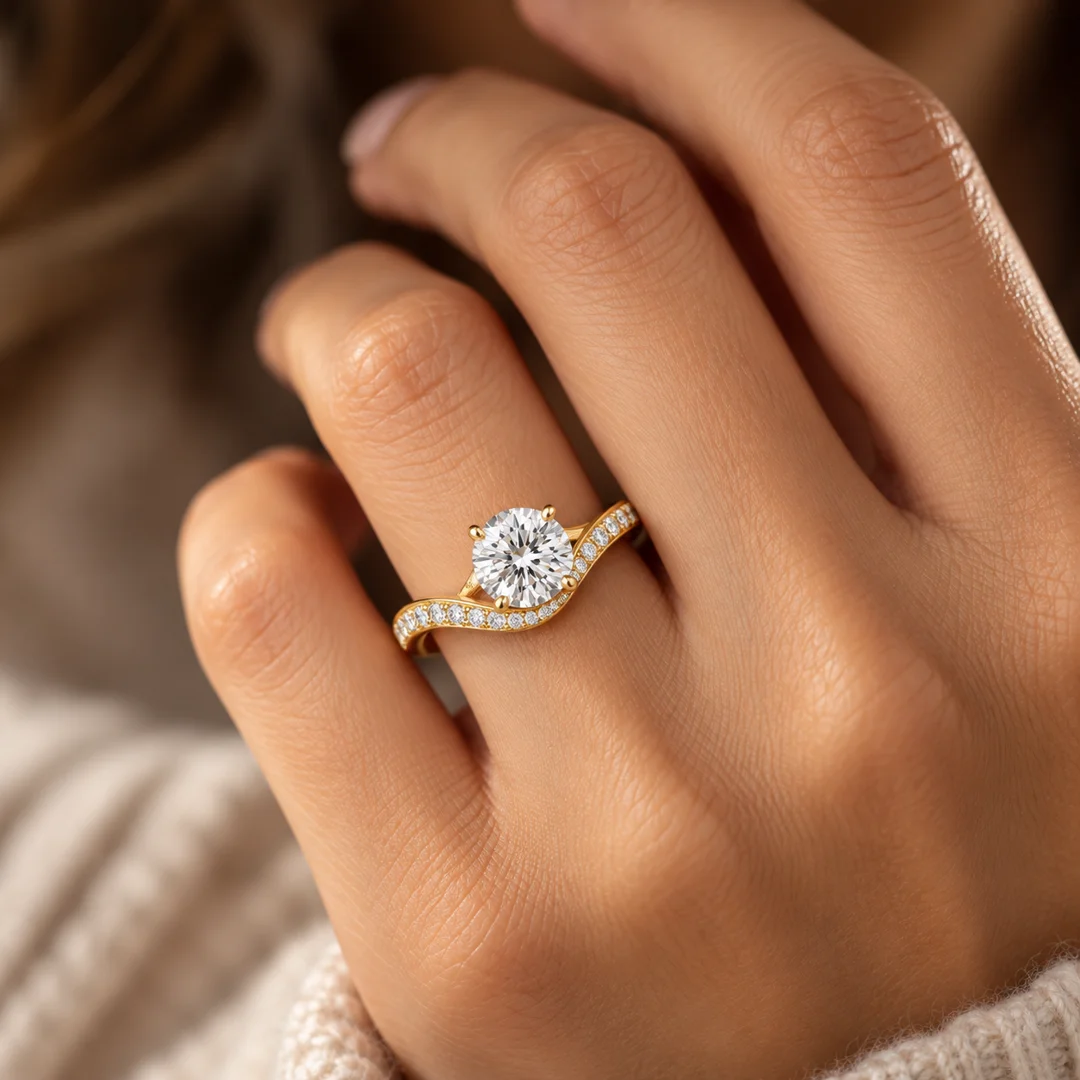
This architecture carries deep emotional resonance. When two separate metal paths intersect to hold a solitary gem, they mirror the journey of two individuals whose independent paths merge into a shared future. The design represents partnership, balance, and unity without erasing individuality—each strand maintains its distinct sweep while contributing to the strength of the whole structure.
The symbolic meaning also extends beyond the couple themselves. In many customs, interwoven motifs have long represented continuity, protection, and enduring connection. A crossover ring carries that visual language into a piece you will see every day, making it as meaningful as it is modern.
Beyond romance, the sculptural curvature creates natural negative space. Light enters from dynamic angles, accentuating your center stone and giving it a floating presence. This openness is not only beautiful; it also reduces the heavy metal mass found in some traditional settings and can make the center gem appear larger than it is. Whether you dream of a subtle infinity twist or an avant-garde architectural piece, choosing custom jewelry in Atlanta GA allows you to customize every curve to match your hand’s natural proportions.
For further context on how this style fits into the broader landscape of bridal design, the American Gem Society is a well-known educational resource on ring settings and gemstone selection.
Popular Variations of the Crossover Engagement Ring
No two crossover silhouettes are identical. Jewelers utilize various techniques to twist precious metals around gemstones:
- Classic Split Shank: The solid band divides as it nears the center setting, widening to create a stable, airy cradle that visually broadens the ring's presence without adding unnecessary bulk.
- Twisted Pavé: One strand remains polished metal while the intersecting strand is encrusted with micro-pavé diamonds, offering a sparkling contrast of textures.
- Asymmetrical Wrap-Around: Rather than meeting at a central point, the band bypasses the stone entirely, curling around the top and bottom in an organic, flowing wave.
- Modern Tension Setting: The opposing tension of the crossover bands securely holds the center gemstone in place without heavy prongs, creating an ultra-clean, contemporary profile.
If you are exploring diamond engagement rings in Decatur GA, our team can help you try on these different silhouettes to find which contour sits most naturally against your finger.
Crossover vs. Traditional Solitaire and Halo Settings
When comparing engagement styles, it helps to understand how the band influences the ring's overall silhouette, daily durability, and visual presence. Exploring how different styles compare—such as the classic debate of halo vs 3 stone rings—can clarify which setting best fits your lifestyle.
| Feature | Crossover Ring | Traditional Solitaire | Classic Halo |
|---|---|---|---|
| Band Aesthetic | Fluid, dynamic, multi-dimensional | Straight, uniform, minimalist | Usually straight, micro-pavé or plain |
| Center Stone Emphasis | Frame enhances height and presence | Complete focus on the standalone gem | Border of stones expands perceived surface area |
| Band Width & Finger Coverage | Medium to wide; broad finger coverage | Narrow to medium; classic footprint | Medium to wide center head |
| Wedding Band Pairing | Contoured, curved, or custom shadow bands | Straight bands fit flush effortlessly | Straight or notched bands depending on basket height |
| Symbolic Meaning | Two lives intertwining into one life | Single devotion, pure simplicity | A radiant circle of eternal protection |
Metal and Gemstone Options That Elevate Crossover Settings
The fluid curves of an intertwined band provide an ideal canvas for exploring diverse precious metals and gems. Because the bands twist over and under one another, combining different metal colors—such as warm yellow gold wrapping around cool platinum—creates striking visual depth.
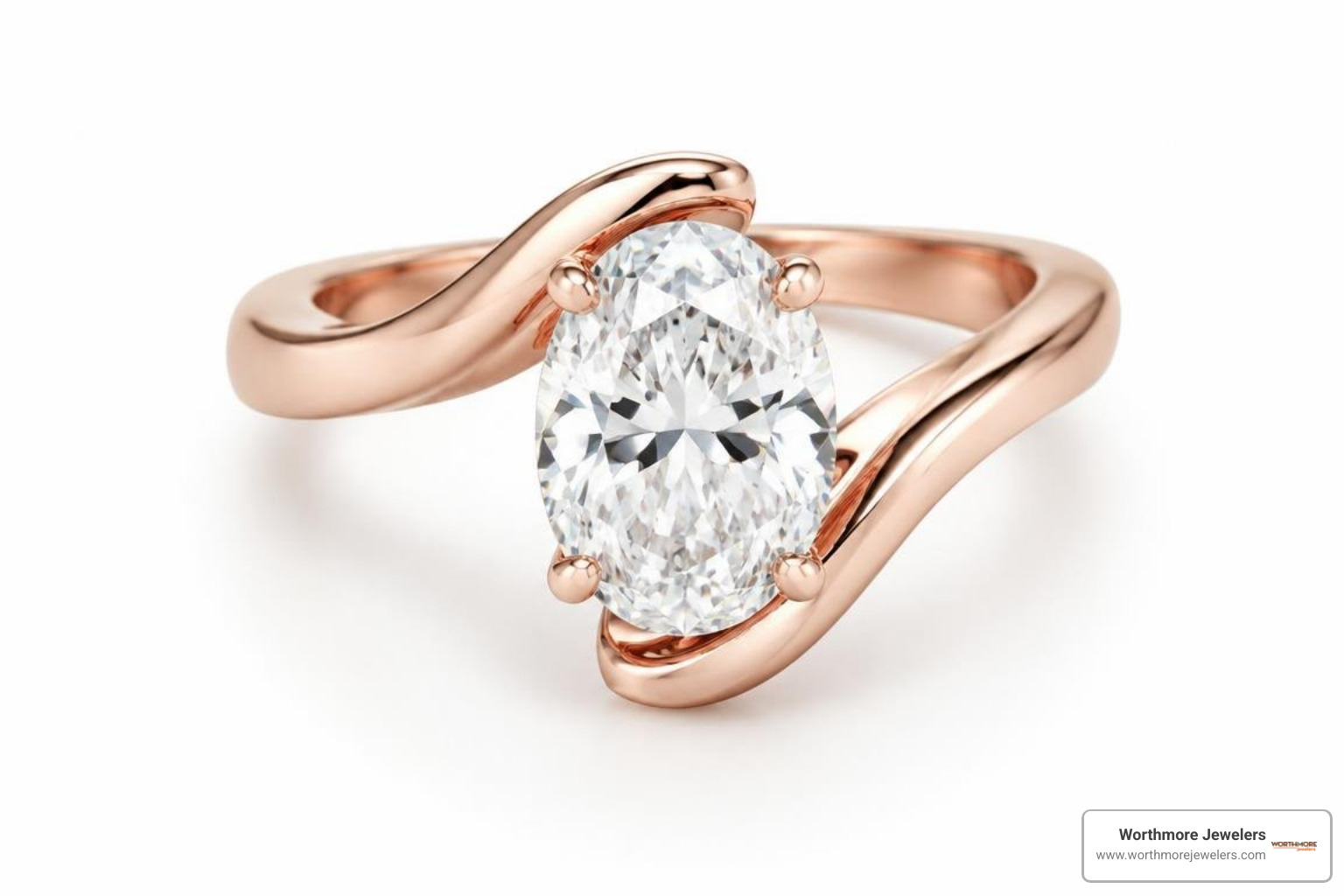
Platinum is renowned for its strength, making it an exceptional choice for delicate bypass prongs and slender, interwoven shanks. Meanwhile, warm rose gold adds vintage romance to flowing contours. When selecting your diamond, understanding the fundamental 4Cs of diamond quality ensures your center stone exhibits the brilliance needed to stand out against sculpted metalwork.
You also have the freedom to choose between mined and created stones. Reviewing the nuances of lab diamonds vs earth diamonds lets you maximize your budget, balancing carat weight and clarity to complement the intricate geometry of a crossover band.
Choosing Diamond Shapes and Accent Gemstones
Certain diamond shapes harmonize effortlessly with sweeping bands. Elongated shapes, like oval and marquise cuts, naturally accentuate the linear flow of bypassing metal. Cushion cuts soften modern architectural shanks, while the clean, crisp lines of a princess cut create an engaging contrast against rounded, fluid curves.
Incorporating colored gemstone accents—such as deep sapphires, rubies, or emeralds—woven into the crossing bands adds vibrant personality, turning your ring into a bespoke statement piece. For brides who prefer a subtle nod to tradition, small pavé diamonds along one strand provide just enough shimmer without distracting from the center stone.
How to Choose the Perfect Crossover Engagement Ring for Everyday Wear
A truly exceptional engagement ring must balance beauty with everyday comfort. Because crossover shanks feature varied widths and elevated profiles, getting the fit right is essential. Learning how engagement rings should fit ensures the ring slides smoothly over the knuckle while staying centered on the finger without spinning.
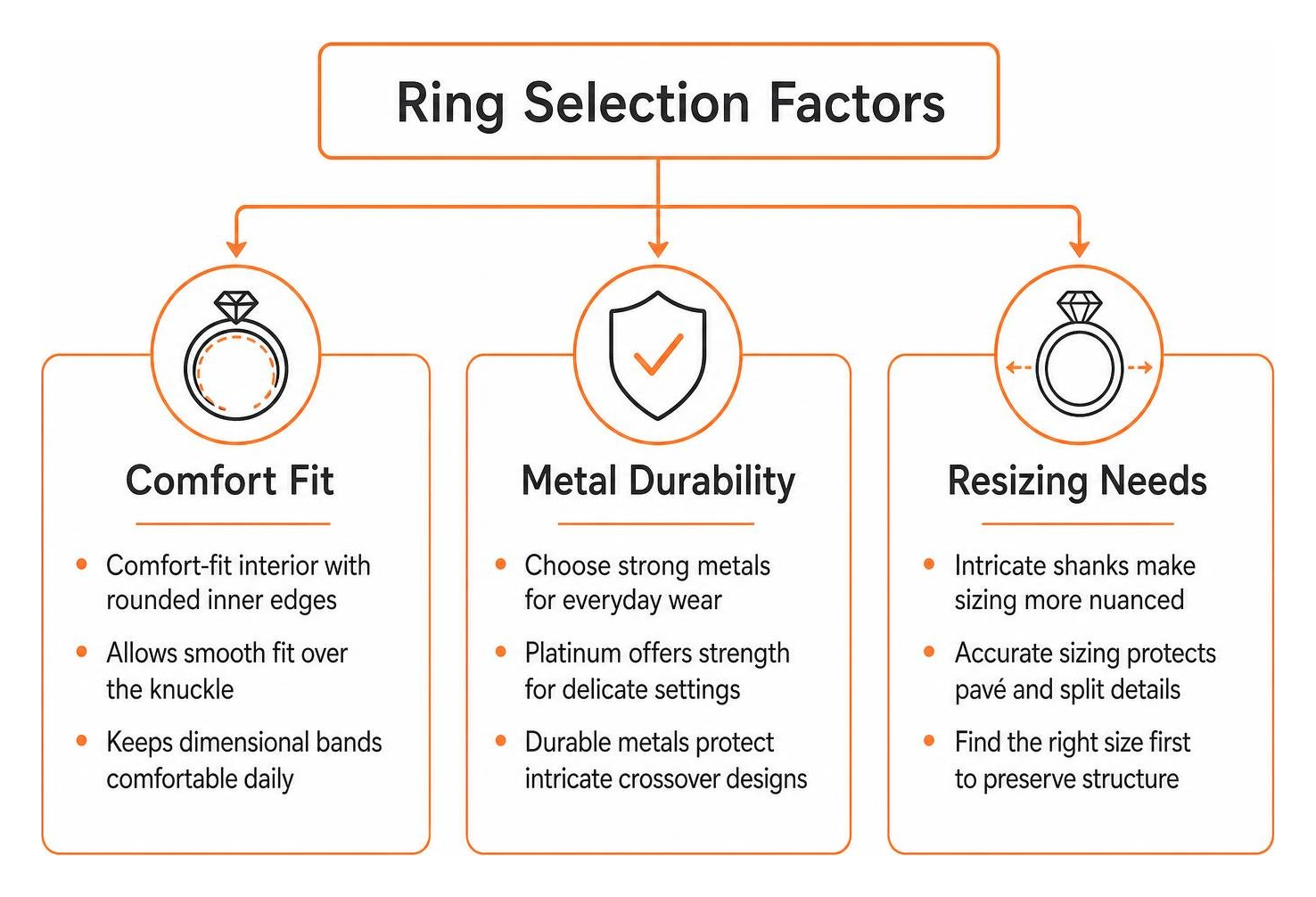
Because intertwined shanks often feature delicate pavé detailing or split profiles, sizing can be more nuanced than with a simple uniform band. Understanding whether engagement rings can be resized highlights why finding the correct size from the start protects the structural integrity of your pavé settings. Choosing a comfort-fit interior with softly rounded inner edges will keep even the most dimensional crossover bands feeling natural during all-day wear.
Stacking and Pairing: Matching Wedding Bands with Twisted Shanks
One of the most common questions brides ask is how to pair a wedding band with an asymmetrical or twisted engagement ring. Because the band sweeps around the center gem, a standard straight band will rarely sit completely flush. However, this does not mean you have to sacrifice comfort or style.
Fortunately, modern bridal styling is far more flexible than it used to be. You can explore versatile stack rings to achieve a curated, layered effect. The options below represent the most practical pairing strategies for crossover shanks:
- Custom Contoured Bands: A wedding band cast to trace the exact undulating silhouette of your crossover ring creates a locking, cohesive fit.
- Open Cuff (Gap) Rings: A band with a deliberate opening at the top allows low bypass settings and center stones to nestle comfortably inside the gap.
- Intentional Negative Space: Some wearers prefer a straight pavé wedding band that sits slightly apart from the crossover shank, creating an organic, layered look.
- Curved Chevron Bands: Pointed or chevron-shaped bands frame the outer curve of the bypass, adding symmetrical structure to the overall bridal set.
Frequently Asked Questions About Crossover Rings
What is the difference between a bypass ring and a crossover engagement ring?
Although the terms are sometimes used interchangeably, they describe distinct design details. A bypass ring features band ends that slide past one another on opposite sides of the center stone, usually without touching. A crossover ring incorporates metal strands that overlap, weave, or cross over each other along the shank. Both styles create movement, but a crossover band tends to have a more intertwined, layered profile.
Are crossover rings durable enough for active lifestyles?
Yes. When crafted by experienced jewelers, crossover settings are engineered for structural integrity. Choosing sturdy prong configurations, such as four-to-six prong heads, or opting for bezel-style protective settings helps safeguard the center gem during daily activities. Regular professional inspections and cleanings will keep the overlapping metalwork secure over time.
How do you pair a straight wedding band with an intertwined crossover ring?
There are three popular approaches. You can embrace the modern open-gap look, where a straight band sits naturally alongside the outer curves of the engagement ring. You can choose a custom contoured or curved band that follows the crossover profile. For a layered effect, a thin spacer ring can separate the two rings, preventing metal-on-metal wear while creating an intentional stacked aesthetic.
Conclusion
A crossover ring is a dynamic choice that elevates your center stone with fluid lines and timeless meaning. At Worthmore Jewelers, we believe ring shopping should be an inspiring, personalized experience. Whether you want to explore ready-to-wear designs or craft a bespoke masterpiece from scratch, our team provides the finest selection of wedding rings in Atlanta. Visit us to find the piece that speaks to your unique love story—and experience why so many couples trust Worthmore Jewelers for engagement rings, custom design, and lifelong jewelry care.
 EMAIL
 CALL
 MAP
 HOURS