

14k Gold Rings vs Other Alloys: Finding Your Metal
14k Gold Rings: The Smart Balance of Beauty and Strength
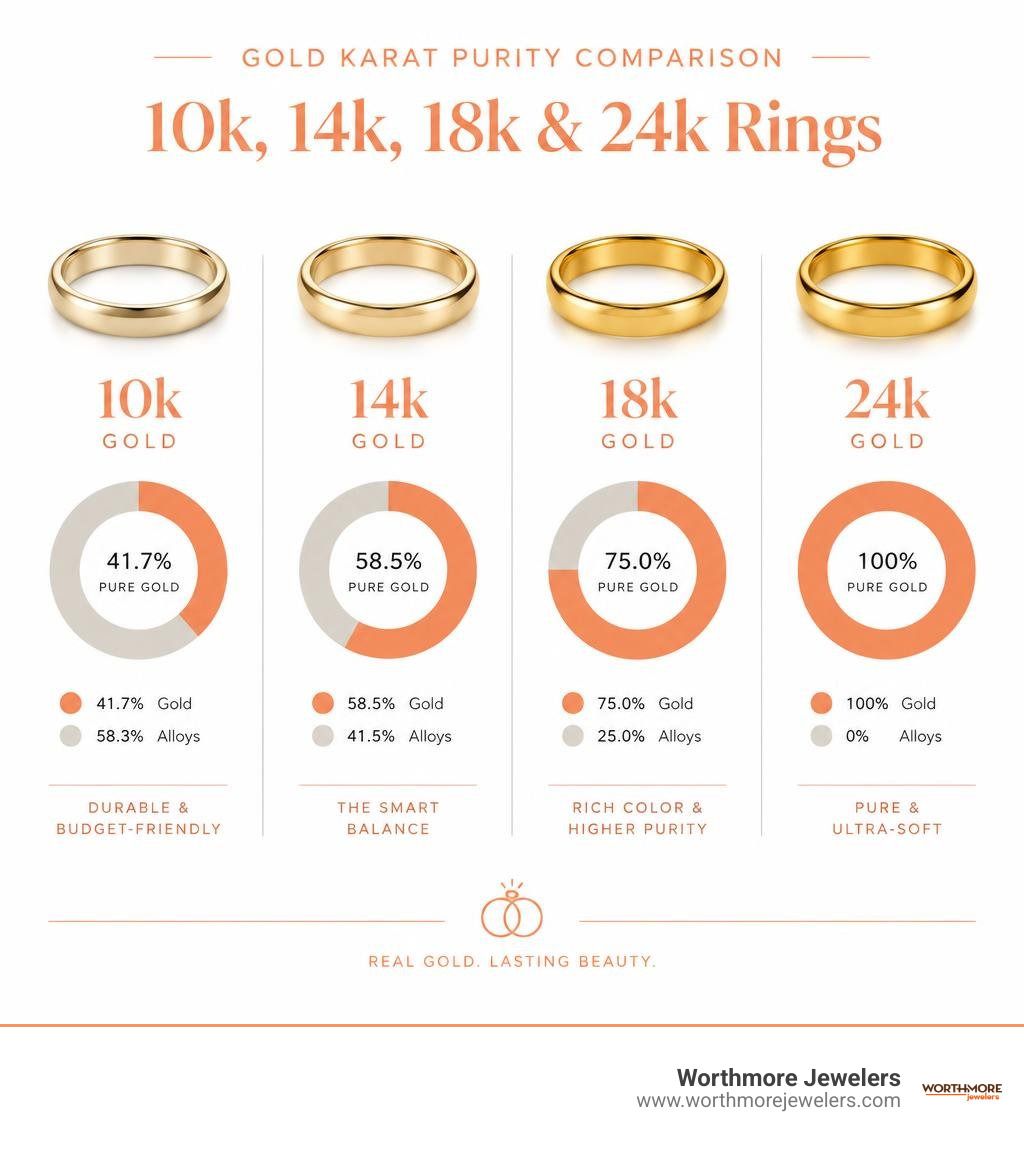
14k gold rings are often the best choice for an engagement ring or daily fine jewelry when you want real gold, lasting strength, and a more accessible price than 18k gold. They contain 58.5% pure gold and 41.5% strengthening alloys, commonly silver and copper. That makes them harder than higher-karat gold while preserving the warm color and value people expect from fine jewelry.
For most couples, the choice comes down to a simple tradeoff:
| Metal option | Best for | Consider before buying |
|---|---|---|
| 14k gold | Everyday engagement rings, diamond settings, stackable bands | A slightly less deep yellow tone than 18k |
| 18k gold | Rich color and higher gold purity | Softer metal that can show wear sooner |
| 10k gold | Lower-cost, durable jewelry | Less gold content and a paler appearance |
| Plated or vermeil | Occasional fashion jewelry | Surface layers can wear away over time |
Solid 14k gold has gold throughout the ring, not just on its surface. It is a strong fit for diamond rings, detailed settings, signet styles, and thin stacking bands. It can also work well for sensitive skin when the alloy is nickel-free and lead-free.
At Worthmore Jewelers, you can explore distinctive 14k gold rings with expert guidance on diamond selection, ring design, fit, and the metal color that best fits your style.
Why 14k Gold Rings Are the Standard for Everyday Fine Jewelry
Pure gold (24 karat) is undeniably gorgeous, but it has a secret: it is remarkably soft. If you tried wearing a solid 24k gold band while lifting grocery bags or hitting the gym, you would quickly find it bending out of round or picking up deep scratches. That is why jewelers blend pure gold with durable metals. In jewelry, gold fineness is the standard way to describe the proportion of pure precious metal in an alloy.
With 14k gold, exactly 58.5% of the alloy is pure gold (hallmarked as 585 in Europe and modern fine jewelry), while the remaining 41.5% consists of silver and copper. This blend delivers superior scratch resistance, structural integrity, and daily wearability without sacrificing the precious glow of fine gold.
Beyond its toughness, 14k solid gold is waterproof, tarnish-resistant, and built for longevity. Unlike fashion pieces that turn your fingers green after a humid afternoon, 14k solid gold does not corrode, flake, or oxidize when exposed to moisture and daily wear.
Composition, Durability, and Hypoallergenic Benefits
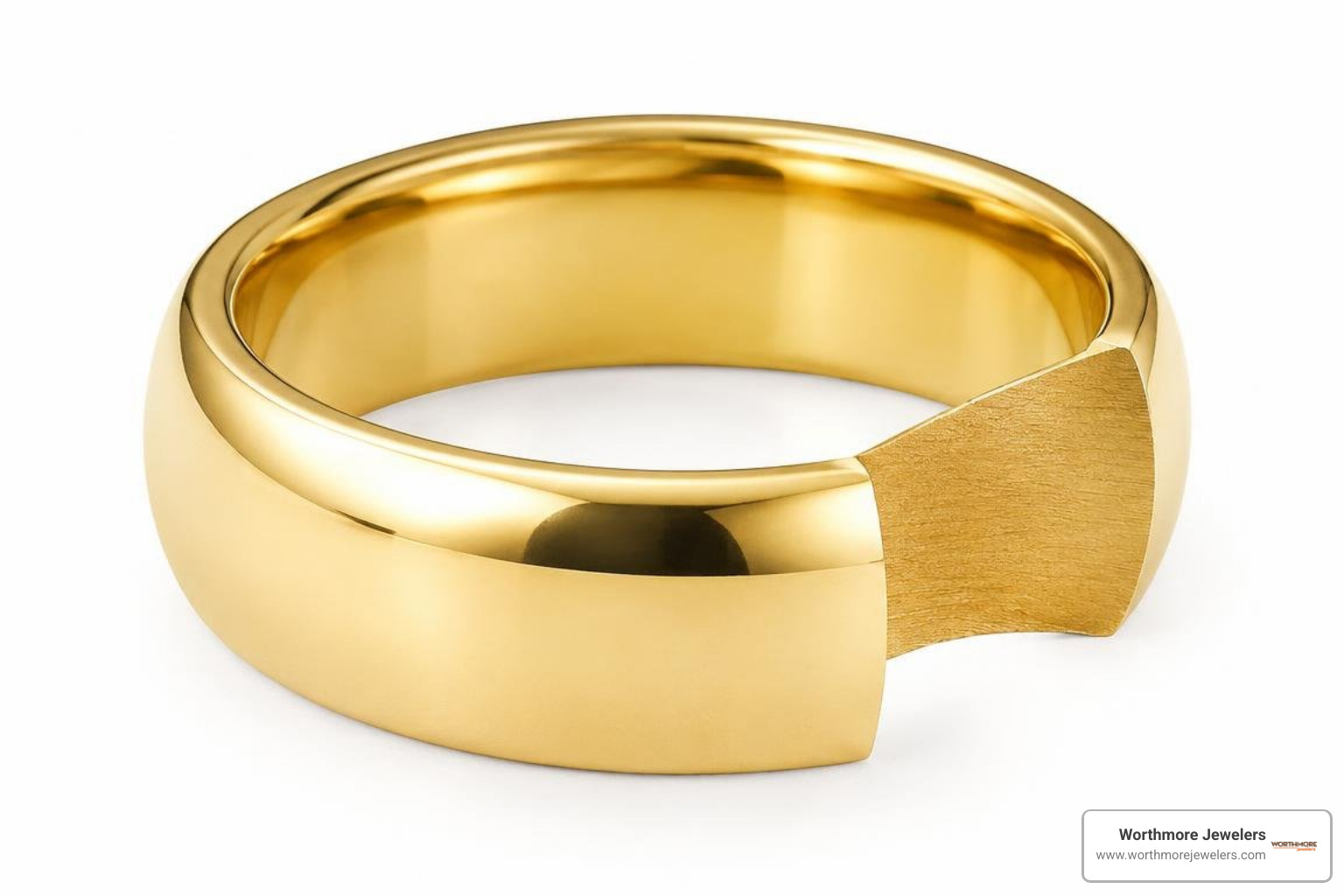
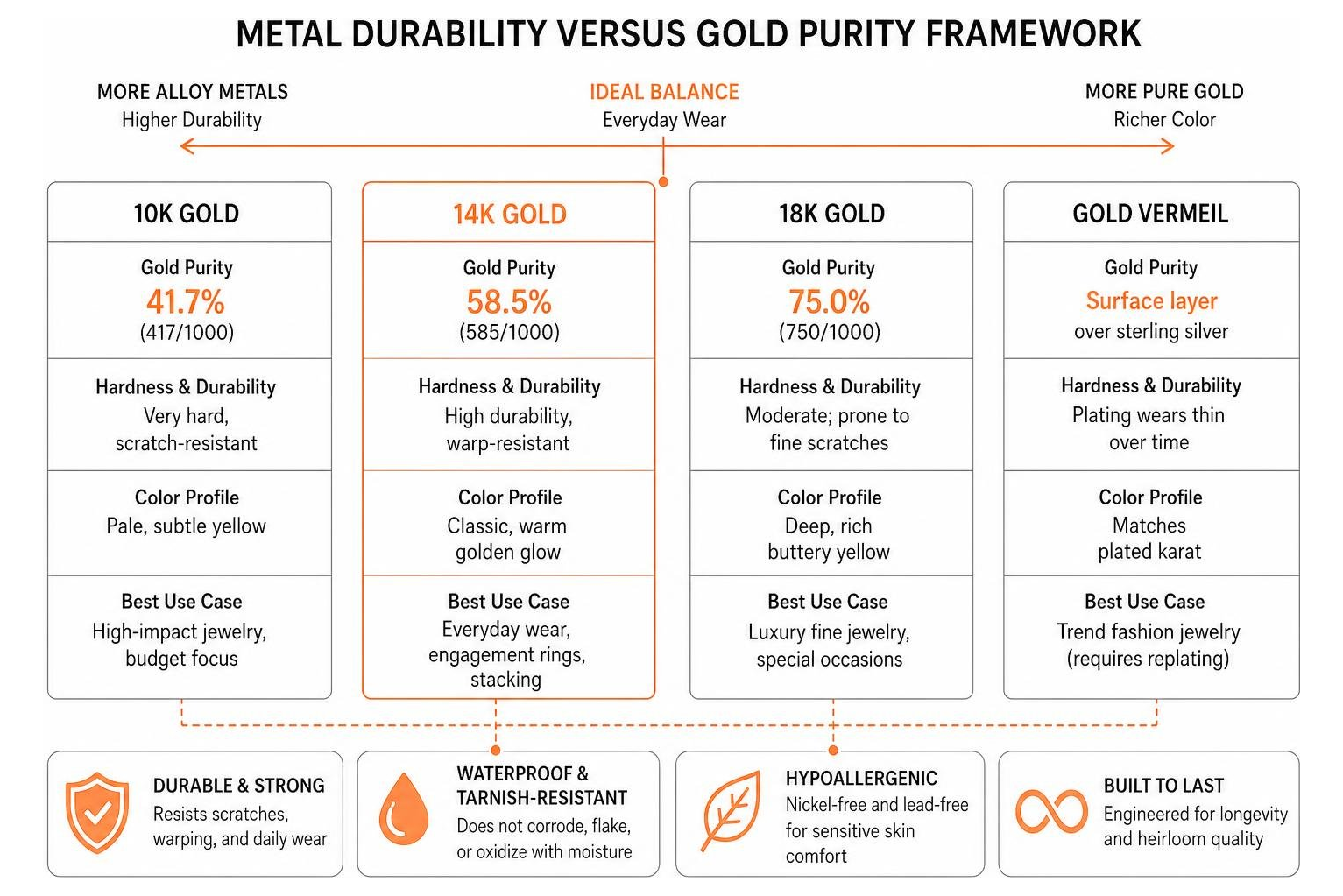
When you invest in solid gold, you receive consistent quality all the way through the core. Because the entire piece is an unplated, uniform alloy, there is no thin electroplated veneer waiting to rub off over time.
For anyone prone to skin irritation, composition matters. High-quality 14k gold is formulated to be nickel-free and lead-free. Nickel is the culprit behind most jewelry-related contact dermatitis. By relying instead on pure gold, sterling silver, and copper, modern 14k gold provides hypoallergenic properties that keep sensitive skin comfortable.
This structural strength also enables jewelry artisans to craft exceptionally delicate pieces. Fine stacker bands can be engineered as thin as 0.04 inches (1mm) or 2mm wide, maintaining their circular shape under daily pressure where weaker metals would warp. At Worthmore Jewelers, you can explore dainty thin band ring designs that showcase this precision craftsmanship.
Comparing 14k Gold Rings with 18k, 10k, and Gold Vermeil
Understanding how 14k compares with other metal options helps you choose the right piece for your lifestyle and budget.
| Alloy / Metal Type | Gold Purity | Hardness & Durability | Color Profile | Best Use Case |
|---|---|---|---|---|
| 10k Gold | 41.7% (417/1000) | Very hard, scratch-resistant | Pale, subtle yellow | High-impact jewelry, budget focus |
| 14k Gold | 58.5% (585/1000) | High durability, warp-resistant | Classic, warm golden glow | Everyday wear, engagement rings, stacking |
| 18k Gold | 75.0% (750/1000) | Moderate; prone to fine scratches | Deep, rich buttery yellow | Luxury fine jewelry, special occasions |
| Gold Vermeil | Surface layer over sterling silver | Plating wears thin over time | Matches plated karat | Trend fashion jewelry (requires replating) |
While 18k gold boasts a 75% purity level and a richer buttery hue, its softer nature makes it more vulnerable to everyday scuffs. Conversely, 10k gold offers extreme hardness but contains more non-gold alloy than pure gold, creating a lighter hue. Gold vermeil requires a heavy gold plate over sterling silver, yet it will eventually wear down to the base metal.
For the vast majority of jewelry lovers, 14k gold strikes the ideal price-to-durability ratio, offering genuine heirloom quality that can be handed down for generations.
Choosing the Perfect Design: Styles, Gemstones, and Stacking
Gold provides an expressive canvas for timeless silhouettes and contemporary statements. Whether you favor vintage-inspired engravings or sleek, modern bands, 14k gold provides the strength needed to secure gemstones and preserve intricate textures.
Popular Styles and Silhouette Trends in 14k Gold Rings
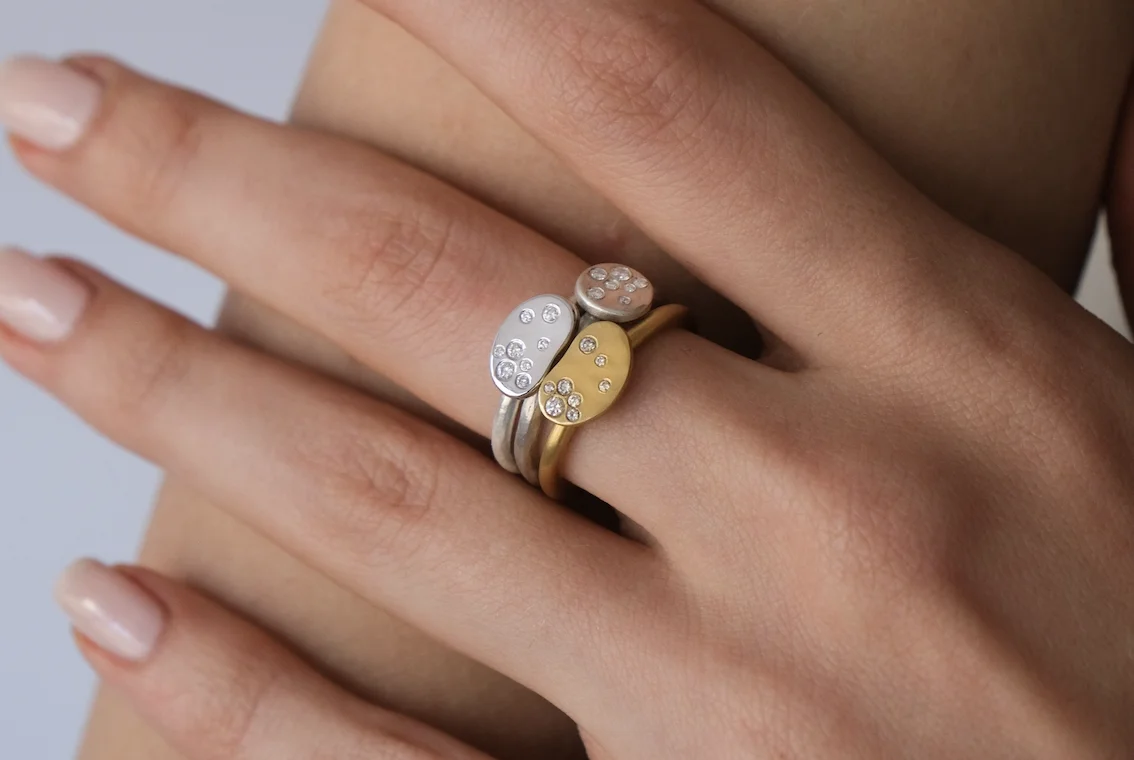
The range of styles available in fine gold ensures an option for every taste:
- Signet Silhouettes: Minimalist, geometric signet pieces deliver tailored elegance, whether worn plain or engraved. Explore Worthmore Jewelers' curated selection of fine signet rings in solid 14k gold for a refined, personalized look.
- Symbolic & Nature Motifs: Designs featuring love knots, clover outlines, and open hearts provide sentimental charm.
- Dainty Stacking Bands: Ultra-slim bands with textured finishes catch light along the finger, perfect for layering or wearing solo.
- Diamond Accents & Geometric Settings: If you prefer clean sparkle, a clean baguette diamond band or a fluid diamond accent infinity ring creates balanced brilliance.
- Textured Gemstone Statements: Vintage detailing shines in designs like a ribbed garnet and diamond accent ring, where deep red garnets contrast against fluted yellow gold.
Stacking Bands and Mixing Metal Colors
Stacking rings allows you to mix silhouettes, gemstones, and complementary metals. When building a ring stack, contrast is your friend:
- Vary the Profiles: Pair straight bands with open, contoured silhouettes like a sculptural wavy row open band to create negative space.
- Add Vivid Gemstones: Break up solid gold bands with color. Introduce cool tones with an ombre blue topaz gold ring or an oval sapphire and diamond band.
- Play with Geometry: Mix organic shapes, such as a cushion peridot and diamond band or an emerald cut amethyst bypass ring, alongside minimalist eternity bands.
- Mix Metal Colors: Combine 14k yellow gold with white or rose gold for a balanced two-tone look. Because 14k alloys share similar hardness levels, they wear comfortably against one another without excessive friction.
Practical Buying Guide: Sizing, Care, and Sustainability
Finding the right ring involves getting an accurate fit, knowing how to clean your piece, and understanding how the gold was sourced.
Accurate Ring Sizing and Fit Essentials
A ring should slide smoothly over your knuckle with light resistance, sitting comfortably at the base of your finger without pinching. In the United States, the average woman’s ring size is roughly a US size 7 (equivalent to European sizes 52 to 54, with an inner circumference of around 54mm).
To size your finger at home:
- Circumference Method: Wrap a non-stretchy strip of paper snugly around the base of your finger. Mark where the ends meet, measure the distance in millimeters, and consult a standard size chart.
- Diameter Method: Measure the exact inside diameter (in millimeters) of a ring that already fits the intended finger well.
- Knuckle Proportion: If your knuckle is significantly wider than your finger base, measure both points and choose a size in between so the ring clears the joint without sliding loosely.
- Temperature Factors: Fingers naturally expand in hot weather and shrink in cold environments. Measure your fingers toward the end of the day when they are at their normal size.
If a ring feels slightly loose or tight, solid 14k gold can be easily resized by our master jewelers.
Cleaning, Maintenance, and Ethical Sourcing
Maintaining the warm luster of 14k solid gold is straightforward:
- Mild Soap Bath: Soak your ring in a small bowl of warm water mixed with a few drops of mild dish detergent for 10 to 15 minutes.
- Gentle Cleaning: Use a soft-bristle toothbrush to gently clear away oils and dust from gemstone settings and beneath the band.
- Rinse and Dry: Rinse thoroughly in warm running water (make sure the sink drain is covered!) and pat dry with a soft microfiber cloth.
Beyond regular care, sustainability is central to modern fine jewelry. Today, fine 14k gold rings are frequently crafted using certified recycled vintage gold. By refining existing precious metals back into pure 14k alloys, jewelers create durable, pristine jewelry that lessens environmental impact while maintaining exceptional quality backed by 2-year manufacturer warranties.
Frequently Asked Questions About 14k Gold Rings
Is 14k solid gold safe for sensitive skin?
Yes. Solid 14k gold made with nickel-free and lead-free alloys is hypoallergenic and safe for sensitive skin. Because solid gold contains no base-metal plating that can chip or wear away, it will not trigger the allergic reactions or skin discolorations often caused by brass, nickel, or low-grade fashion jewelry.
Can I wear a 14k gold ring in water without tarnishing?
Yes. Solid 14k gold is inherently waterproof and resistant to tarnish, rust, and corrosion. You can wear it while washing your hands or showering without damaging the metal. However, we recommend removing gold rings before swimming in chlorinated pools or hot tubs, as harsh chemical oxidizers can weaken alloy bonds over time.
How does 14k gold compare to 18k gold in price and hardness?
14k gold is harder and more scratch-resistant than 18k gold because it contains 41.5% structural alloys (copper and silver) compared to 18k gold's 25%. This added strength makes 14k ideal for active daily routines. Additionally, 14k gold is more accessible in price while delivering a warm, classic golden tone.
Conclusion
When choosing fine jewelry that balances durability, timeless color, and everyday comfort, 14k solid gold remains the premier standard. It resists daily wear, supports sensitive skin, and holds up beautifully whether styled as a delicate solo band or an eye-catching gemstone statement.
If you are looking for the finest curation of jewelry, Worthmore Jewelers offers the very best selection of handcrafted pieces, custom designs, and ethically sourced gemstones. Whether you visit our welcoming locations in Atlanta and Decatur, Georgia, or consult our team for custom design work, we are here to help you find a ring you will cherish for a lifetime.
Explore our complete collection of fine 14k gold rings to discover your next signature piece.
 EMAIL
EMAIL
 CALL
CALL
 MAP
MAP
 HOURS
HOURS