

The Smart Shopper's Handbook to Buying Real 14K Gold Necklaces
Choose 14K Gold Necklaces That Fit Your Style and Last
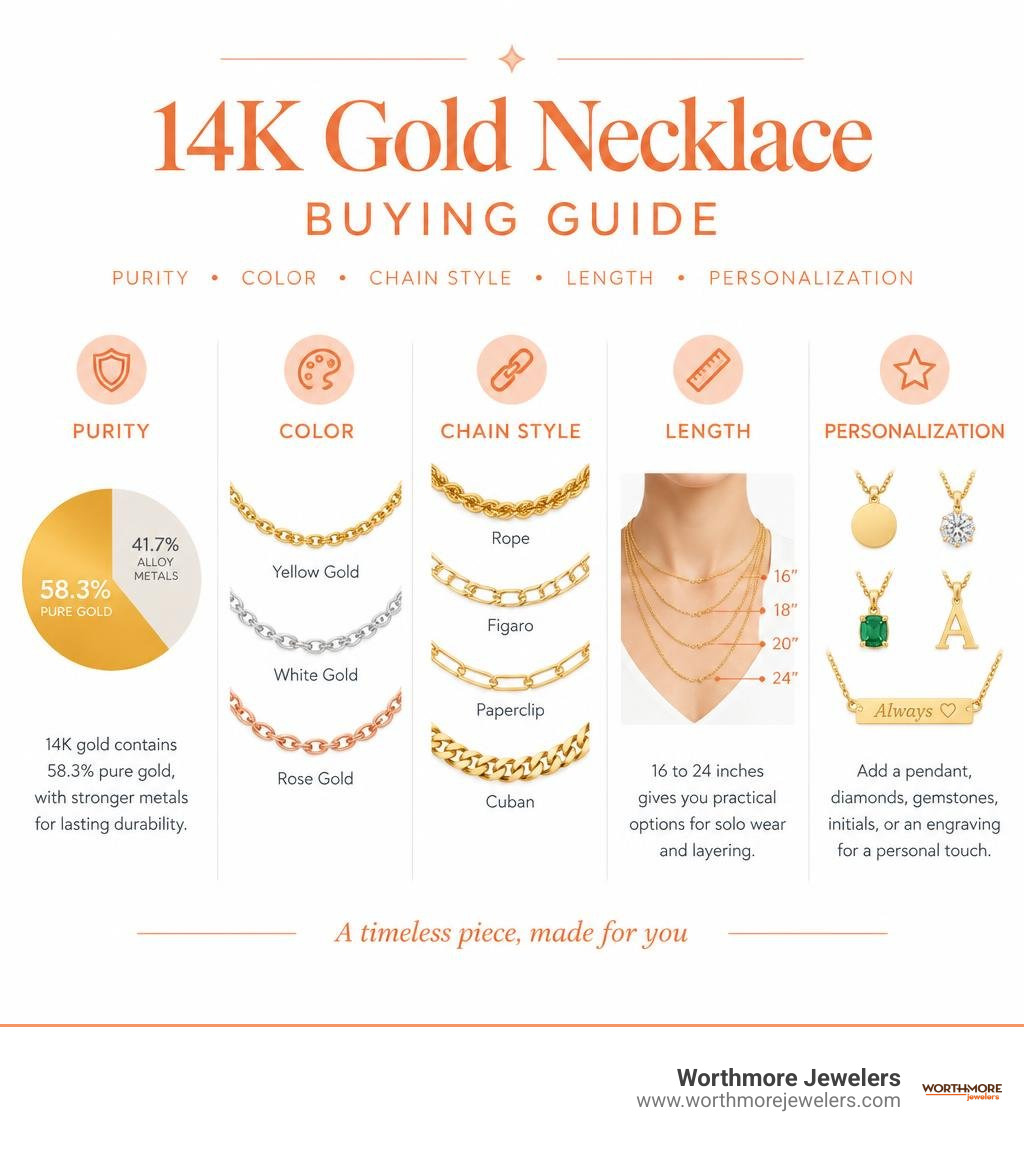
For a fine chain you can wear often, 14k gold necklaces are a smart place to start. They contain 58.3% pure gold, combined with stronger metals that help the necklace stand up to daily life. Choose a solid-gold chain, then narrow your options by:
- Style: rope and Figaro chains feel classic; paperclip and Cuban links make more of a statement.
- Color: yellow gold is traditional, white gold looks crisp, and rose gold adds a warm blush tone.
- Length: 16 to 24 inches gives you practical options for solo wear and layering.
- Details: add a pendant, diamonds, gemstones, initials, or an engraving for a more personal piece.
A great necklace should feel like you, whether it is a simple everyday chain or a meaningful piece for an engagement-season milestone. At Worthmore Jewelers, you can explore a carefully chosen selection of fine gold necklaces and get guidance on authenticity, quality, and the design details that matter most. For more on gold purity, see Gold.
Understanding 14K Gold: Purity, Durability, and Color Finishes
When browsing fine jewelry, understanding karatage helps you choose a piece that balances aesthetic beauty with practical strength. Gold karatage measures the ratio of pure gold to alloyed metals out of 24 parts. Pure 24-karat gold is naturally soft, malleable, and easily scratched, making it less than ideal for intricate chains that encounter friction throughout the day.
By alloying gold with metals such as copper, silver, zinc, and nickel, jewelers create a durable material suited for modern living. A 14K gold piece consists of 14 parts pure gold and 10 parts alloy metals, translating to roughly 58.3% (or 58.5%) gold purity. This specific ratio offers exceptional tarnish resistance, high tensile strength, and hypoallergenic qualities suitable for sensitive skin.
| Gold Karat | Pure Gold Percentage | Alloy Percentage | Relative Durability | Ideal Everyday Use |
|---|---|---|---|---|
| 14K Gold | 58.3% – 58.5% | 41.5% – 41.7% | High (Scratch & bend resistant) | Daily wear, active lifestyles |
| 18K Gold | 75.0% | 25.0% | Moderate (Rich color, softer) | Fine evening wear, statement pieces |
| 24K Gold | 99.9% | < 0.1% | Low (Very soft, prone to warping) | Ceremonial jewelry, investment bars |
Yellow, White, and Rose Gold Alloys
The alloy recipe determines not only durability but also the final color tone of the metal. Because 14K gold contains over 41% alloyed metals, master jewelers can adjust the mixture to produce distinct hues:
- Classic Yellow Gold: Formed by blending pure gold with equal parts silver and copper, preserving the rich, warm, and traditional golden glow that has remained beloved for centuries.
- Crisp White Gold: Created by alloying pure gold with white metals like nickel, palladium, and zinc, then coated with bright rhodium plating for a reflective, silvery finish. This creates an ideal backdrop for diamonds, seen in shimmering white gold diamond line styles.
- Blush Rose Gold: Produced by incorporating a higher proportion of copper alloy into the mix, resulting in a romantic, pinkish-red luster that flatters a wide variety of skin tones.
Solid Gold vs. Gold Filled and Vermeil
Navigating the jewelry market requires understanding the difference between solid 14K gold and layered alternatives. While gold-plated or gold-filled items provide short-term affordability, they feature a base metal core (such as brass or sterling silver) coated in a thin exterior of gold.
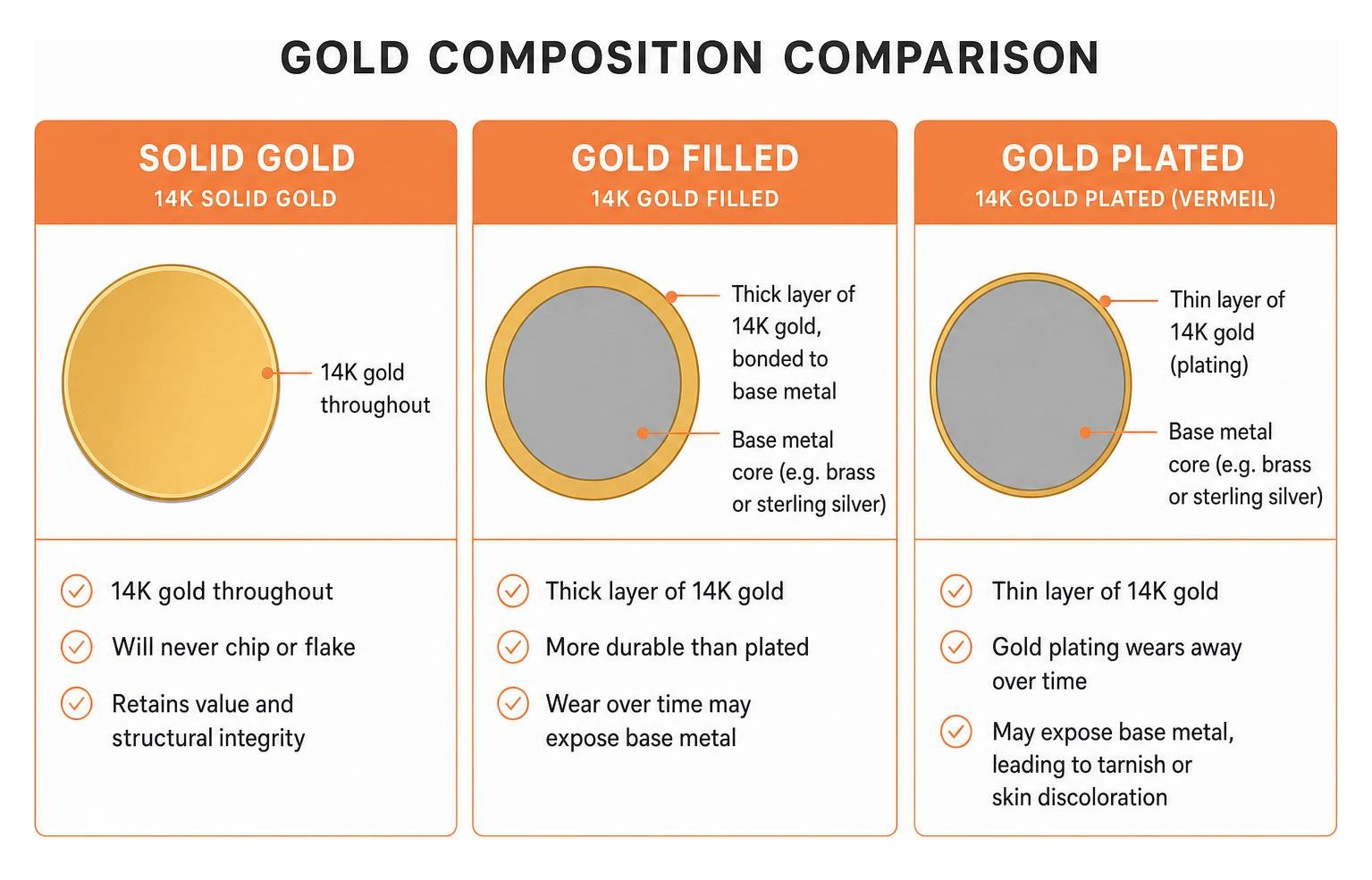
Over time, gold plating wears away, exposing the base metal beneath and leading to tarnishing or skin discoloration. In contrast, genuine 14K solid gold contains the same consistent alloy throughout its entire structure. It will never chip or flake, retaining its intrinsic value and structural integrity as an heirloom investment.
Popular Chain Styles and Designs in 14K Gold Necklaces
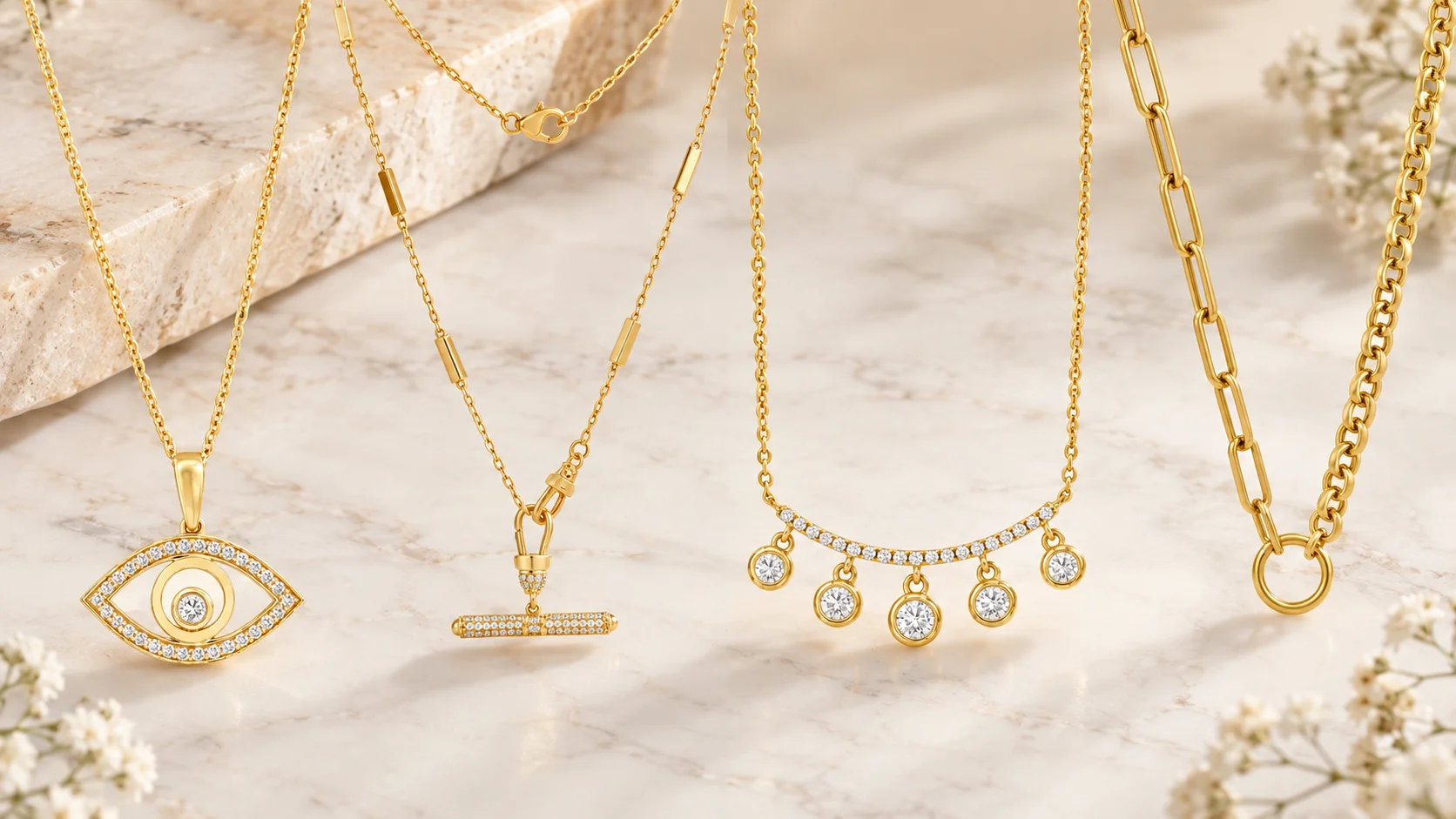
The architecture of a chain dictates how it catches the light, how it drapes against the collarbone, and how well it supports pendants. When choosing a chain, link structure and closure security are paramount. For daily wear, high-grade lobster-claw clasps offer the most reliable security, preventing accidental snags from releasing your favorite piece.
Classic and Trending 14K Gold Necklaces for Everyday Wear
Modern jewelry trends combine traditional craftsmanship with contemporary geometry. The most popular everyday chain profiles include:
- Paperclip Links: Featuring elongated, clean-cut rectangular links, this profile offers an airy, minimalist aesthetic that works seamlessly alone or stacked.
- Cuban & Curb Chains: Interlocking, flat-laying rounded links provide substantial surface area and bold shine, delivering unmatched durability.
- Rope Chains: Spiraled, woven links create a radiant, twisted texture that flexes fluidly against the skin.
- Station Chains: Subtle chains interspersed with geometric bars or gemstones, such as versatile yellow gold bar station pieces, which add visual rhythm to an everyday stack.
- Figaro & Nameplate Chains: Alternating short circular links with elongated oval links, often paired with custom script plates for personalized name necklaces.
Statement Pendants, Gemstones, and Diamond Accents
Beyond simple chains, adding diamonds, colored gemstones, and sculptural elements transforms a gold necklace into a signature personal piece:
- Celestial & Medallion Motifs: Vintage-inspired coin pendants offer tactile depth, such as reversible diamond medallion motifs featuring celestial engravings.
- Vibrant Gemstone Stations: Integrating precious gems adds color contrast, exemplified by alternating emerald and diamond designs or playful multi-colored sapphire links.
- Organic Textures: Combining yellow gold with lustrous gems, as seen in elegant pearl station chains, blends timeless grace with modern design.
- High-Carat Diamond Statements: For special occasions, multi-row diamond statement looks deliver brilliant scintillation across the neckline.
Essential Styling, Layering, and Customization Tips
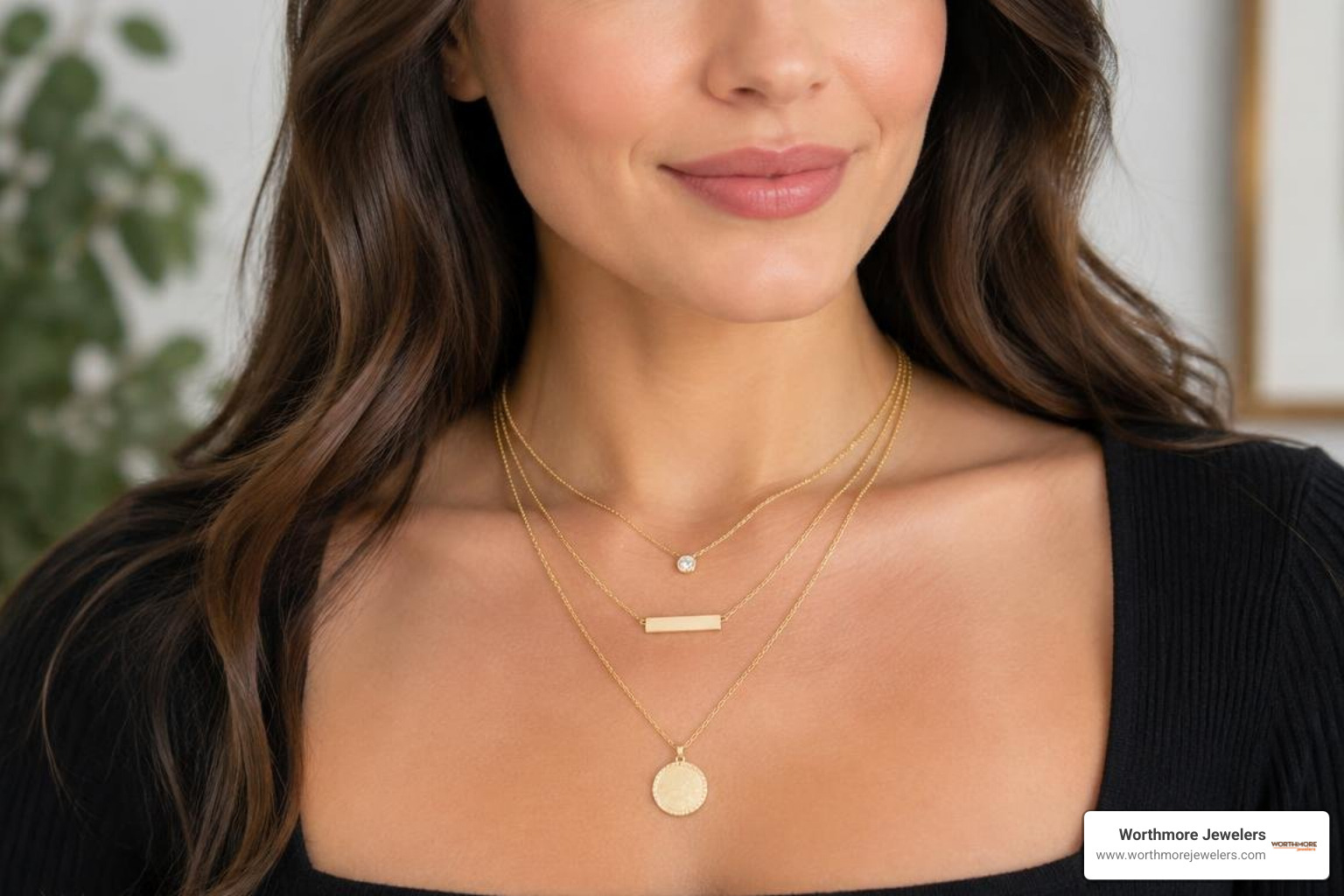
Creating a curated neck stack requires balancing visual weight, texture, and length. To prevent chains from tangling and to create a cohesive aesthetic, follow these foundational layering principles:
- Vary the Lengths: Establish 2-inch increments between layers (for example, stacking a 16-inch, 18-inch, and 20-inch chain). This gives each necklace space to breathe.
- Mix Link Textures: Pair a smooth, solid paperclip or snake chain with a textured rope or diamond line necklace to introduce visual contrast.
- Incorporate a Focal Point: Place a heavier pendant or medallion on the longest chain to anchor the stack.
- Embrace Customization: Personalize your look with birthstones, engraved coordinates, or initials to make the arrangement distinctly yours.
How to Properly Clean and Care for 14K Gold Necklaces
Solid 14K gold requires minimal maintenance to retain its deep luster, but routine care prevents the buildup of body oils, cosmetics, and everyday dirt:
- Routine Cleaning: Soak the necklace in warm water mixed with a few drops of mild dish soap for 10–15 minutes. Gently clean around link crevices and gem settings with a baby toothbrush or soft-bristle brush, rinse thoroughly under lukewarm water, and pat dry with a microfiber cloth.
- Chemical Precautions: Remove jewelry before swimming in chlorinated pools, entering hot tubs, or handling harsh household cleaners to protect both the gold alloy and any delicate gemstones.
- Safe Storage: Store necklaces flat or hung in a lined jewelry organizer to prevent chain links from kinking or scratching against harder gemstones.
- Periodic Inspection: Check clasps, jump rings, and prong settings every few months to ensure stones remain secure and clasps snap shut firmly.
Frequently Asked Questions About 14K Gold Jewelry
Is it safe to wear a 14k gold necklace every day?
Yes. Because 14K gold contains 41.7% durable alloy metals, it resists scratching, bending, and surface wear exceptionally well. It does not tarnish from normal skin contact, perspiration, or fresh water, making it well-suited for round-the-clock wear.
What is the difference between solid 14k gold and gold-plated chains?
Solid 14K gold features a consistent, pure gold and metal alloy throughout the entire chain, ensuring it will never chip, flake, or expose reactive base metals. Gold-plated chains use a thin gold coating over brass or copper that quickly wears away with friction, often triggering skin reactions.
What chain length is best for layering fine necklaces?
A 16-inch choker resting at the collarbone paired with an 18-inch standard chain and a 20- or 24-inch pendant chain provides the ideal graduation for everyday layering, complementing crew necks, button-downs, and V-neck tops.
Conclusion
A well-crafted gold chain is an enduring personal accessory that effortlessly bridges daily casual wear and refined evening elegance. Choosing solid 14K gold guarantees you receive a piece with lasting structural resilience, rich color, and timeless appeal.
When you are ready to find your next signature piece, Worthmore Jewelers offers the premier destination for fine jewelry. Whether you are seeking custom design work, certified diamond accents, or bespoke layering chains, our team provides an welcoming, local shopping experience. We invite you to visit our showrooms when looking for necklaces in Atlanta, GA, or explore our curated collection of fine gold necklaces to discover a piece tailored to your personal aesthetic.
 EMAIL
EMAIL
 CALL
CALL
 MAP
MAP
 HOURS
HOURS