

Solid Gold Stacking Secrets Every Jewelry Lover Should Try
Why 14k Gold Bracelets Are the Ultimate Stacking Foundation
When curating a wrist stack designed for daily life, material integrity is everything. Pure gold (24 karat) is naturally soft, malleable, and prone to bending or scratching under the slightest pressure. That is why master jewelers create alloys—combining pure elemental gold with high-grade metals such as silver, copper, and zinc.
A 14k gold piece contains exactly 58.3% pure gold, often stamped with the classic 585 hallmark (representing 585 parts per thousand). This specific proportion provides an optimal balance: it preserves the rich, warm luster of fine gold while delivering exceptional tensile strength and scratch resistance.
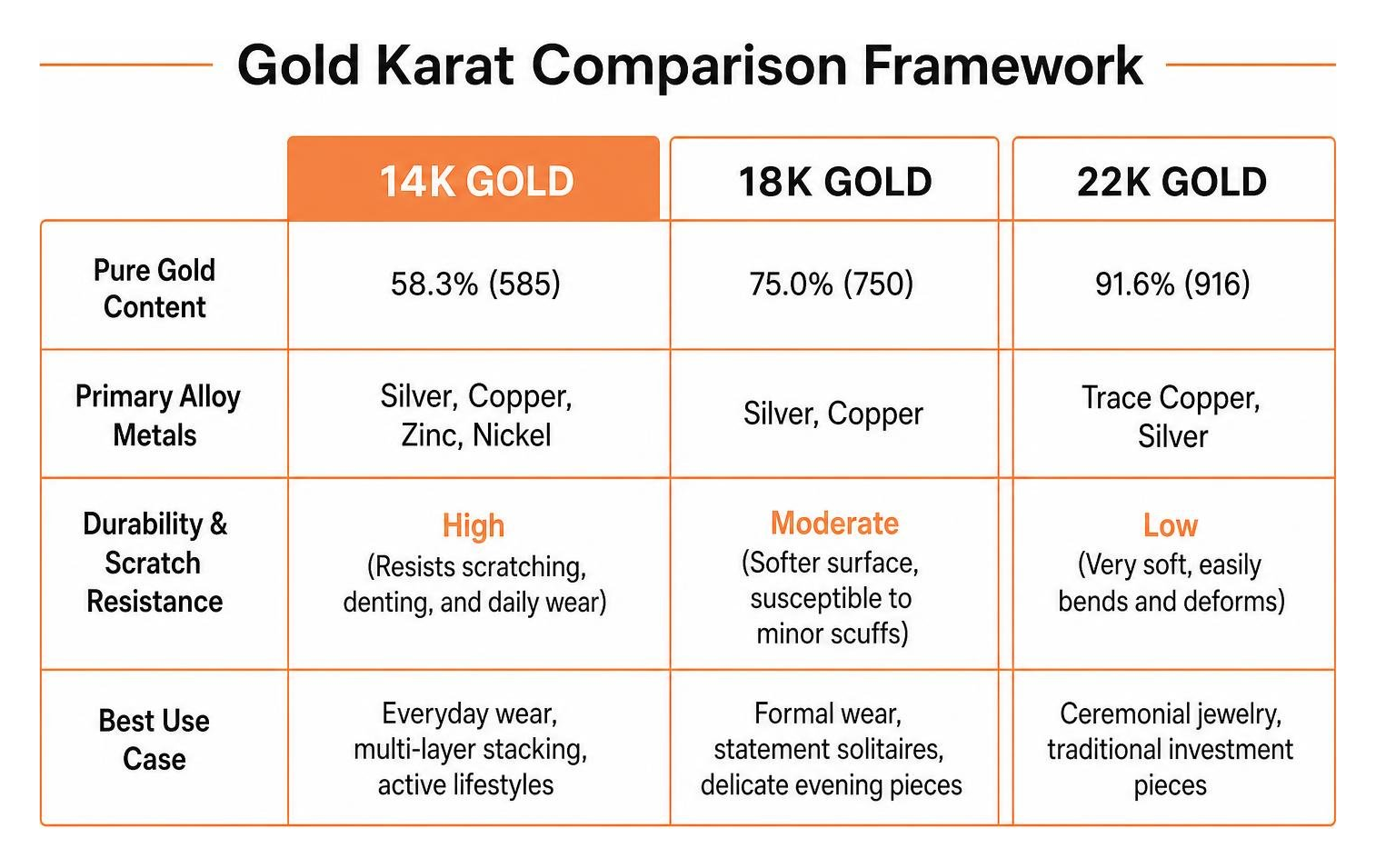
| Karat Purity | Pure Gold Content | Primary Alloy Metals | Durability & Scratch Resistance | Best Use Case |
|---|---|---|---|---|
| 14K Gold | 58.3% (585) | Silver, Copper, Zinc, Nickel | High (Resists scratching, denting, and daily wear) | Everyday wear, multi-layer stacking, active lifestyles |
| 18K Gold | 75.0% (750) | Silver, Copper | Moderate (Softer surface, susceptible to minor scuffs) | Formal wear, statement solitaires, delicate evening pieces |
| 22K Gold | 91.6% (916) | Trace Copper, Silver | Low (Very soft, easily bends and deforms) | Ceremonial jewelry, traditional investment pieces |
Beyond strength, 14k gold provides a versatile color palette:
- 14K Yellow Gold: Offers a timeless, buttery glow that flatters every skin tone without the overly brassy hue of higher-karat alloys.
- 14K White Gold: Plated with brilliant rhodium to yield a sleek, silvery sheen that pairs cleanly with platinum rings and diamond accents.
- 14K Rose Gold: Infused with copper to produce a romantic, vintage-inspired blush that adds subtle warmth to mixed-metal layouts.
Because 14k gold resists surface wear and tarnishing, your stack will maintain its structure, clasp security, and radiant finish through morning routines, desk work, and evening outings alike. For a deeper look at how karatage affects durability, the gold standard remains a useful reference for understanding alloy composition.
Essential Styles for Building a Dynamic Wrist Stack
A dynamic bracelet stack is built on visual contrast. Layering identical chains often results in a flat, tangled look. By varying chain silhouettes, surface textures, and physical weights, each piece catches light differently while maintaining its own space on the wrist.
Classic Chains and 14k Gold Bracelets with Statement Links
Statement links serve as the visual weight in your collection. These pieces ground your wrist curation, catching the eye and giving the stack a clear focal point.
- Paperclip Chains: Clean, elongated rectangular links bring an airy, architectural modernity to your arm.
- Cuban & Curb Links: Interlocking, flat-faced links sit flush against the skin, delivering a bold flash of gold with fluid movement.
- Rope Chains: Delicately woven spirals create a continuous spiral texture that reflects light from every angle.
- Cable Chains: Classic round or oval loops create a crisp, versatile silhouette that layers effortlessly with wider designs.
- Polished Knot Accents: A smooth central knot motif introduces an organic focal point to an otherwise streamlined link bracelet.
- Clasp Security: Look for well-engineered lobster clasps, which offer superior spring tension and peace of mind compared to basic spring rings.
Modern Twists and Delicate 14k Gold Bracelets
Delicate chains provide the subtle light play that makes a stack feel curated rather than heavy.
- Twisted Chains: Tightly wound spiral links produce a subtle shimmer that dances with natural wrist movement.
- Whisper Links: Ultra-fine, featherlight chains (often weighing under 1.5 grams) introduce delicate shimmer without adding bulk.
- Minimalist Bar Bracelets: Sleek geometric bars curve gently along the wrist, breaking up rhythmic chain patterns.
- Adjustable Jump Loops: Bracelets equipped with multiple closure loops allow you to fine-tune the drape between 6.5 and 7.5 inches, ensuring smaller chains sit cleanly above structured pieces.
Solid Bangles and Cuffs
Rigid bangles and open cuffs act as the physical anchor of any layout. While chains shift with gravity, a solid bangle maintains its silhouette, preventing lighter strands from sliding down or wrapping tightly around one another.
- Hinged Bangles: Feature secure box clasps with figure-eight safety catches, allowing for a snug, tailored fit around the wrist bone.
- Open Cuffs: Slip on effortlessly, bringing bold geometric lines and negative space into the center of your stack.
- Textural Finishes: Combine mirror-polished cuffs with hammered, brushed, or diamond-cut bangles to create rich textural depth.
Expert Styling Rules for Flawless Gold Layering
Building a cohesive bracelet stack is an art that blends balance, proportions, and personal expression. Follow these foundational styling guidelines to create a comfortable, polished stack:
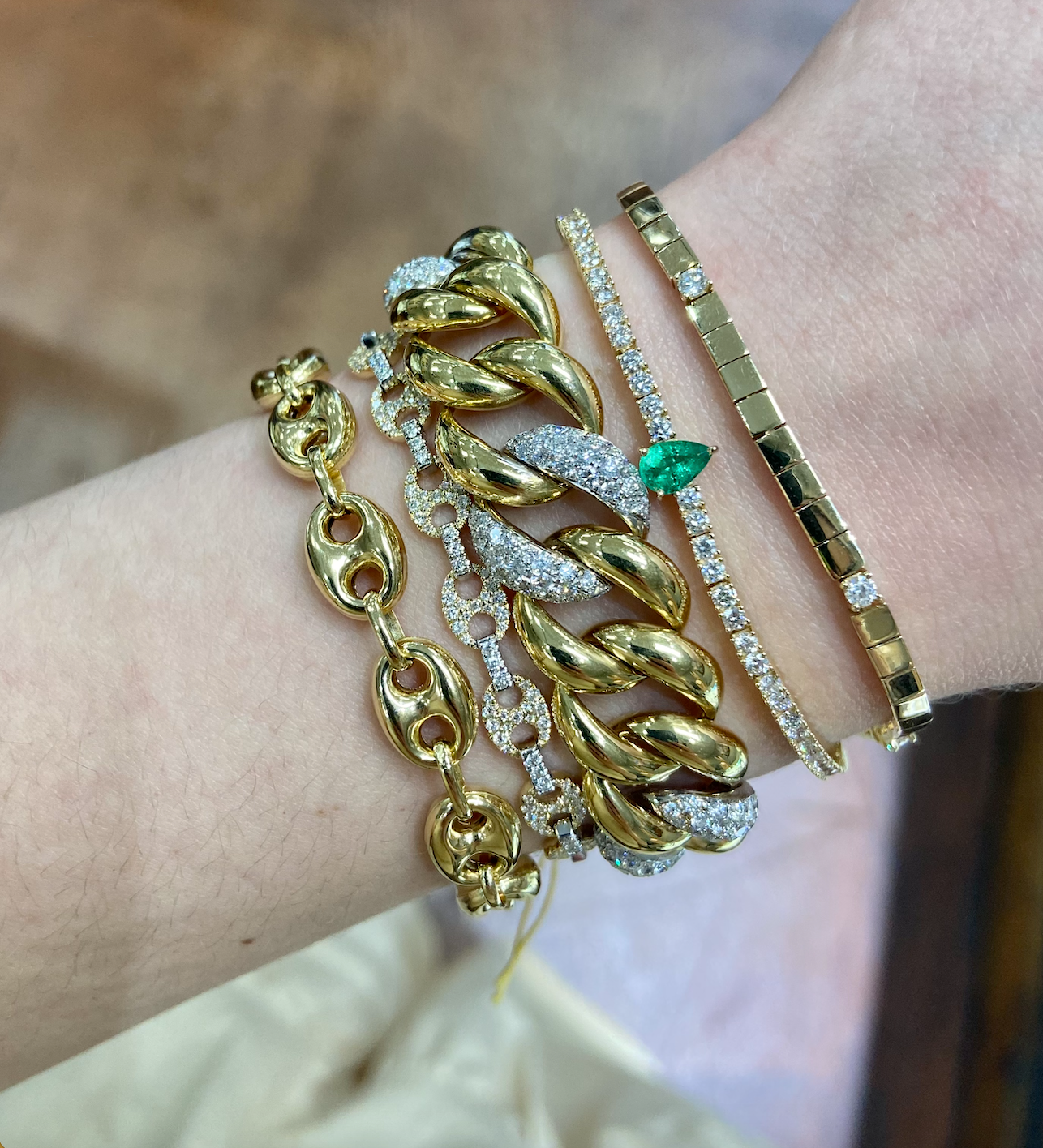
- Follow the Rule of Three: When in doubt, start with three distinct pieces—one structured anchor (such as a solid bangle), one textured piece (like a rope or twisted chain), and one bold statement link (such as a paperclip or Cuban chain).
- Vary Link Weights and Gauges: Avoid stacking multiple heavy chains together, which can look crowded and feel uncomfortable. Instead, sandwich a delicate whisper chain between a medium link and a structured cuff.
- Alternate Textures: Place smooth, mirror-polished surfaces adjacent to twisted or diamond-cut links. This high-low contrast ensures individual pieces do not visually blend together.
- Stagger Lengths for a Natural Cascade: Select chain lengths that vary by 0.5 inches (e.g., pairing a 6.5-inch chain with a 7-inch chain). This creates a staggered drape along the forearm and minimizes chain crossover.
- Incorporate Timepieces Seamlessly: If wearing a watch, place a smooth, low-profile chain or a rigid bangle on either side of the case. Ensure the bracelet does not have sharp edges that could scratch the watch crystal.
- Mix Metals Intentionally: While monochrome yellow gold remains a classic, introducing a white or rose gold bracelet adds dimension. Ground the look by repeating each chosen metal hue at least once across your rings, earrings, or necklace.
Daily Care and Maintenance for Long-Lasting Shine
While 14k gold is remarkably resilient, everyday elements like lotions, perfumes, and natural skin oils can gradually coat polished surfaces and diminish their luster. A simple, consistent care routine will keep your gold shining brightly.

- Gentle Cleaning Routine: Soak your bracelets in a bowl of warm water mixed with a few drops of mild, phosphate-free dish soap for 10 to 15 minutes. Use an extra-soft baby toothbrush to gently lift dirt from intricate links, knots, and clasps. Rinse thoroughly in clean warm water and pat dry with a lint-free cloth.
- Polishing Cloths: Use a dedicated, non-abrasive microfiber jewelry polishing cloth to restore mirror luster. Avoid aggressive buffing, which can prematurely wear delicate hallmarks or decorative finishes.
- Safe Storage Habits: To prevent tangling and surface scuffs, store bracelets flat in individual soft fabric pouches or dedicated velvet-lined jewelry compartments. Fasten all clasps before storing to eliminate link knots.
- Chemical Precautions: Remove your bracelets before entering chlorinated swimming pools, hot tubs, or handling household cleaning chemicals like bleach. Chlorine can weaken alloy metals over time, compromising solder points and clasp springs.
- Ultrasonic Cleaner Caution: While plain solid gold chains generally tolerate ultrasonic cleaning, pieces set with delicate gemstones, pearls, or hollow links should be cleaned strictly by hand to prevent structural fatigue.
Frequently Asked Questions About Gold Bracelet Stacks
Can you wear 14k gold bracelets in the shower every day?
Yes, solid 14k gold is water-resistant and will not rust or tarnish from exposure to pure water. However, daily shower exposure exposes gold to soaps, body washes, and hard water minerals. Over time, these products leave a thin film over intricate chain links, dulling their natural brilliance. If you choose to wear your stack continuously, schedule a gentle monthly warm-water cleaning to remove soap residue and restore shine.
How many bracelets should you wear in a stack?
For daily comfort, a curation of three to five bracelets is ideal. This range creates visual depth without feeling heavy or noisy during movement. For formal events, you can expand to six or seven layered pieces across varying widths. A good rule of thumb is to leave at least two to three inches of bare wrist above your stack to maintain balanced proportions.
How do you prevent stacked chain bracelets from tangling?
To prevent fine chains from twisting around one another:
- Mix different chain weights rather than wearing multiple ultra-fine chains together.
- Incorporate at least one rigid bangle or cuff between flexible link chains to act as a physical divider.
- Fasten clasps on the underside of your wrist and position heavier charms or knot motifs forward so gravity naturally keeps them aligned.
- Choose chains with staggered lengths so they rest at different points on your forearm.
Conclusion
A thoughtfully curated bracelet stack is one of the most personal ways to express your style. By choosing solid 14k gold, you invest in jewelry that delivers everyday durability, enduring value, and effortless warmth. Whether you start with a single twisted chain or layer bold links with structured bangles, each piece adds dimension to your signature look.
At Worthmore Jewelers, we believe fine jewelry should be lived in and loved every single day. Our welcoming team is here to help you explore different chain styles, test fits, and curate a custom stack tailored to your lifestyle. Explore handcrafted gold bracelets online or visit our Atlanta and Decatur showrooms to discover the premier destination for fine jewelry stacking.
 EMAIL
EMAIL
 CALL
CALL
 MAP
MAP
 HOURS
HOURS